




Table of Contents Show
Fall is a lovely time to begin journaling because the season naturally brings change, reflection, and slower evenings. Still, staring at a blank page can make journaling feel harder than it should.
You do not need perfect handwriting, expensive supplies, or something deep to say every day.
These fall journaling ideas include creative pages, practical check-ins, seasonal memories, and thoughtful prompts so you can find a style that feels enjoyable rather than forced.
1. Create a Fall Senses Journal

A senses journal helps you notice the small details that make fall feel special. Instead of writing a long diary entry, record one thing you noticed through each of your five senses.
You might write about the sound of rain against your window, the smell of cinnamon in the kitchen, the rough feel of a knitted sweater, or the color of leaves on your morning walk.

For People Who Love to Make Things ✂️
Repeat the exercise once a week and compare your entries as the season changes. Early fall may feel warm and bright, while later entries could include colder mornings, darker evenings, and holiday preparations.
Try writing about:
- Something beautiful you saw today
- A sound that made the day feel peaceful
- A seasonal food or drink you enjoyed
- A texture that felt comforting
- A scent you want to remember
2. Design a Fall Bucket List Spread
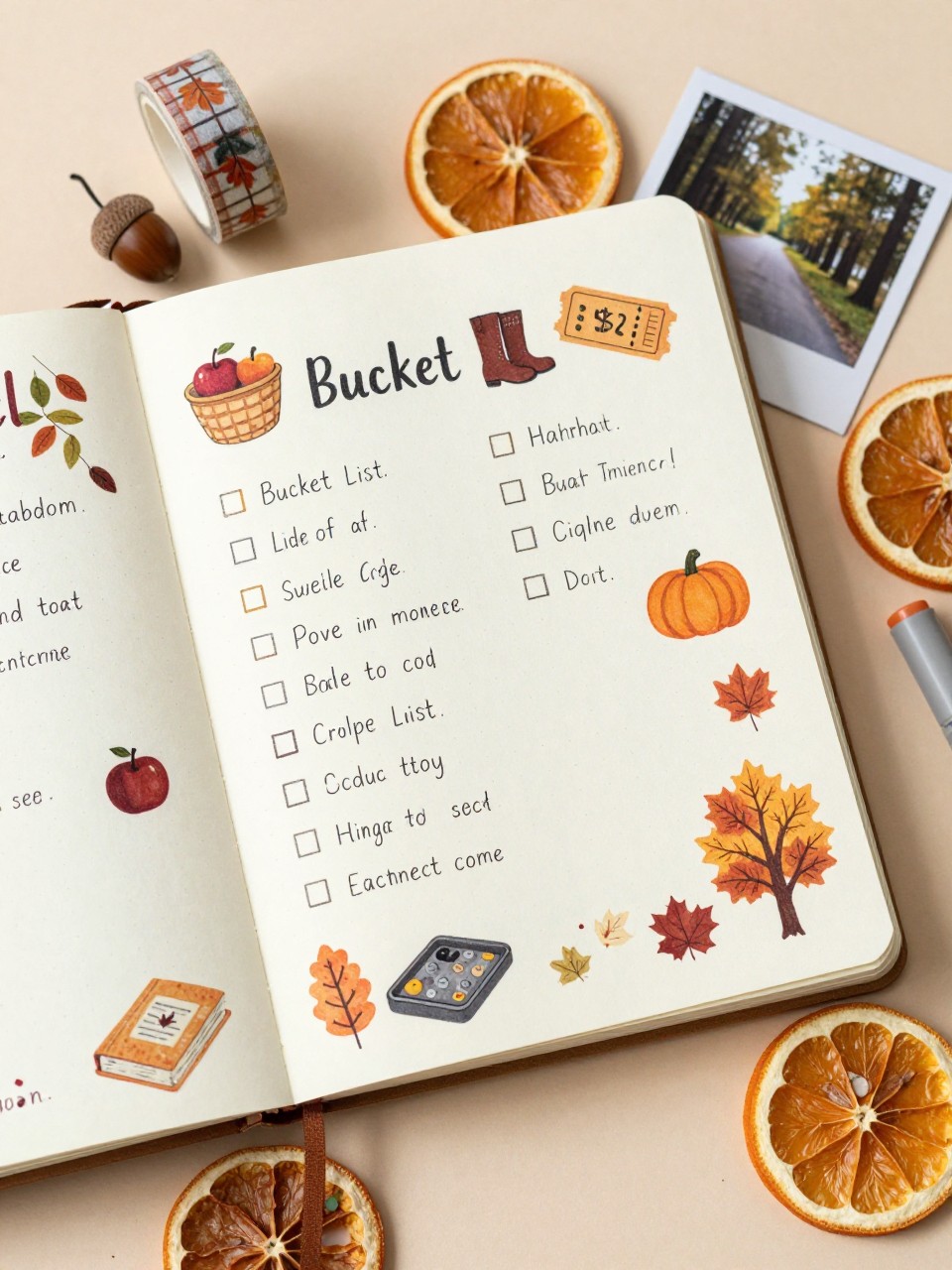
Turn the activities you hope to enjoy into a visual journal page. Your bucket list can include simple ideas, bigger outings, and a few restful activities for days when you want to stay indoors.
Mix familiar fall activities with choices that fit your actual lifestyle. You could visit a farmers’ market, bake something with apples, take an evening walk, wear a bold fall lipstick, reread a favorite book, or host a soup night.
Leave space beside each activity for a date, small photo, rating, or sentence about how it went. This turns the page into a record of the season instead of only a list of plans.
3. Start a Seven-Day Cozy Moments Log

Challenge yourself to record one cozy moment each day for a week. It does not need to be impressive. The point is to notice comfort while it is happening.
Your entry might describe changing into warm pajamas after work, finding a quiet seat in a café, hearing a favorite song, or climbing into freshly washed sheets.
Add the time, place, and one sensory detail to make each memory more vivid. By the end of the week, you may discover that your best moments are often simple and easy to repeat.
4. Make a Fall Mood and Energy Tracker

A mood tracker can help you understand how shorter days, sleep, work, social plans, and daily habits affect how you feel. Keep it simple enough that you can update it in under a minute.
Choose a small symbol or color for each mood. Use a second tracker for energy so you can tell the difference between feeling emotionally low and simply being physically tired.
At the end of each week, add a short note about what may have influenced the pattern. Avoid judging yourself. The purpose is to notice useful connections, not force yourself to feel happy every day.
5. Write a Letter to Your End-of-Fall Self

Write a letter to the version of yourself who will reach the end of fall. Describe how life feels now, what you are working through, and what you hope will improve.
Include small details that may be easy to forget, such as your current favorite song, the show you are watching, the people you speak to most, or the routine you are trying to build.
Seal the letter and choose a date to open it. When you read it later, focus on the changes you made, the things you survived, and the hopes that developed in unexpected ways.
6. Build a Fall Beauty and Style Journal

Use your journal to plan the look and feeling you want for the season. This can include hair ideas, nail colors, makeup combinations, clothing formulas, fragrances, and accessories.
Rather than creating a page filled only with products to buy, begin by reviewing what you already own. Write down new combinations you want to try and note any genuine gaps in your wardrobe or beauty routine.
Add photos, color swatches, sketches, or magazine cutouts. Your finished page should feel like a personal guide, not a list of trends you are required to follow.
7. Keep a Fall Walk Observation Journal

Bring a small notebook on your next walk and pause for a few minutes to write about what is happening around you. This can help an ordinary route feel more interesting.
Describe the weather, trees, people, buildings, animals, or sounds you notice. You could also sketch a leaf, record a conversation fragment, or write a few words about how your body feels while walking.
Visit the same location several times throughout the season. Your entries will show changes in the scenery as well as changes in your own thoughts and energy.
8. Create a Seasonal Gratitude Page With Proof

Instead of writing a general list of things you feel grateful for, record a specific moment and explain why it mattered. This makes the practice feel more personal and less repetitive.
For example, rather than writing “I am grateful for my friend,” describe the message they sent when you were having a difficult day. Instead of “I am grateful for food,” write about the warm meal that made a cold evening feel better.
Add small pieces of proof when possible, such as a photograph, receipt, note, pressed leaf, or ticket. Over time, the journal becomes a collection of real memories rather than a page of repeated phrases.
9. Plan a Fall Personal Reset Page

Use one journal page to review the parts of your life that feel cluttered, rushed, or neglected. A reset page can help you turn vague stress into a few clear actions.
Divide the page into sections such as home, beauty, health, work, relationships, and rest. Under each one, write what is going well, what feels difficult, and one change that may help.
Keep the changes realistic. “Clear my bedside table” is easier to act on than “organize my entire life.” Return to the page after a few weeks and update it without criticizing yourself.
10. Make a Fall Memory Scrapbook Journal
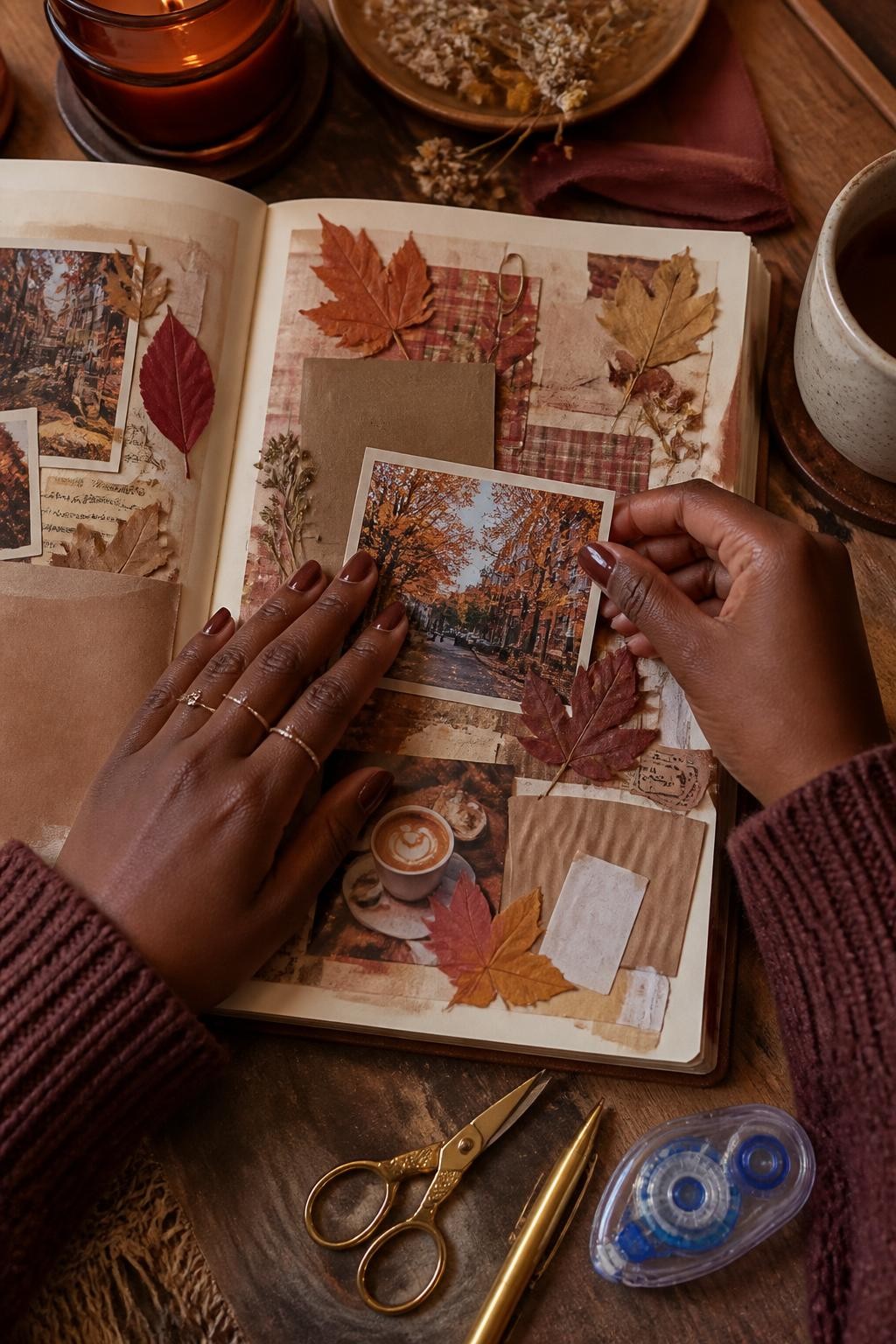
Combine journaling with photographs and small keepsakes from your fall activities. The pages do not need to follow a perfect layout or match one color scheme.
Save items such as tickets, notes, café sleeves, tags, dried flowers, or printed pictures. Add the date and a few sentences explaining what happened and how you felt.
Do not wait for a major event. A quiet breakfast, new recipe, rainy afternoon, or visit with a friend can be worth remembering. Everyday moments often become the most meaningful pages later.
11. Try a Fall “Currently” Journal Page

A “currently” page captures what your life feels like right now. It is quick to complete and fun to reread months or years later.
Write down what you are currently watching, reading, wearing, eating, learning, avoiding, enjoying, and looking forward to. Add your favorite beauty product, song, scent, outfit, or place of the moment.
Create one page at the beginning, middle, and end of fall. Comparing them can reveal how quickly preferences, routines, and priorities change.
12. Write Your Ideal Fall Day From Morning to Night

Imagine a fall day that would leave you feeling rested, happy, and satisfied. Write it from the moment you wake up until you go to bed.
Include realistic details such as what you would eat, wear, read, do, and avoid. Decide who would be there, where you would go, and how much quiet time you would have.
Once the entry is complete, circle two or three parts you can recreate in real life. You may not be able to copy the entire dream day, but you can plan the morning walk, comforting dinner, phone-free hour, or early bedtime.
Make Fall Journaling Feel Enjoyable
You do not need to complete every idea or write each day. Choose the journaling styles that fit your personality and the amount of time you have.
Some weeks may call for a quick mood tracker, while others may inspire a full scrapbook page or personal letter. Keep your journal honest, flexible, and private enough that you do not feel pressure to make every page beautiful.
The best fall journal is not the one with perfect handwriting or expensive decorations. It is the one that helps you notice your life, understand yourself, and remember the season more clearly.