



Table of Contents Show
Painting planets is one of those relaxing hobbies that helps you slow down and make something pretty without needing perfect drawing skills. If you’ve been staring at a blank canvas or you just want beginner painting ideas that feel calming, a space theme is a fun place to start.
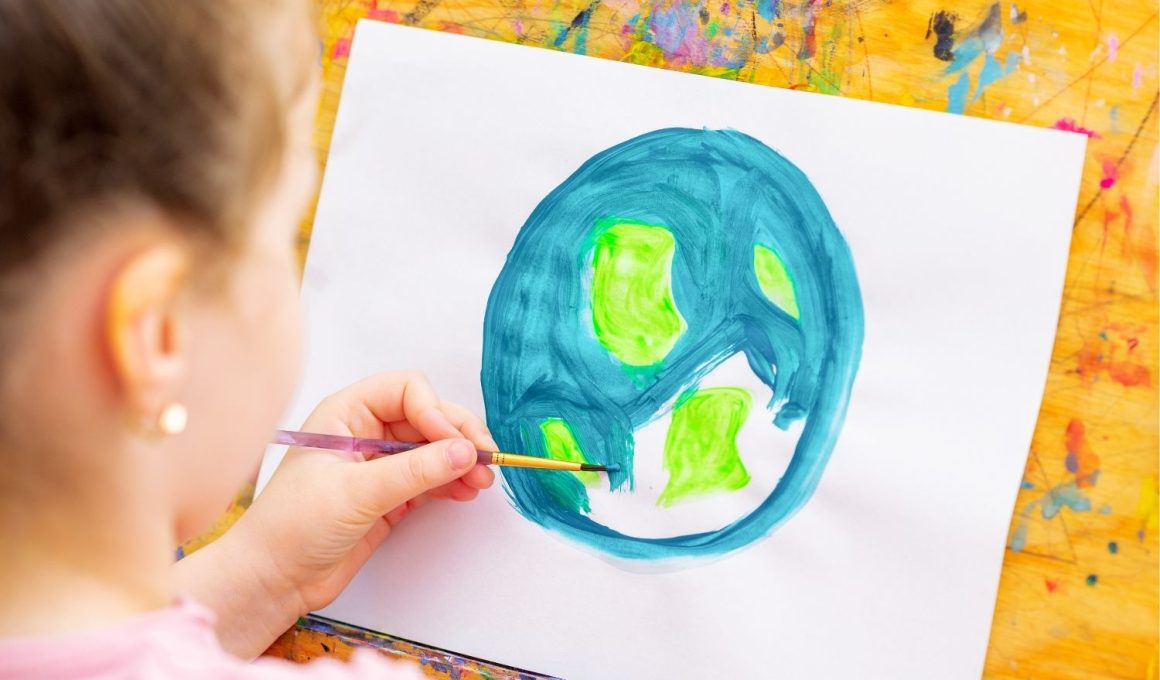
Planets are basically circles, which makes them friendly for new painters, but they can still look stunning on a wall.
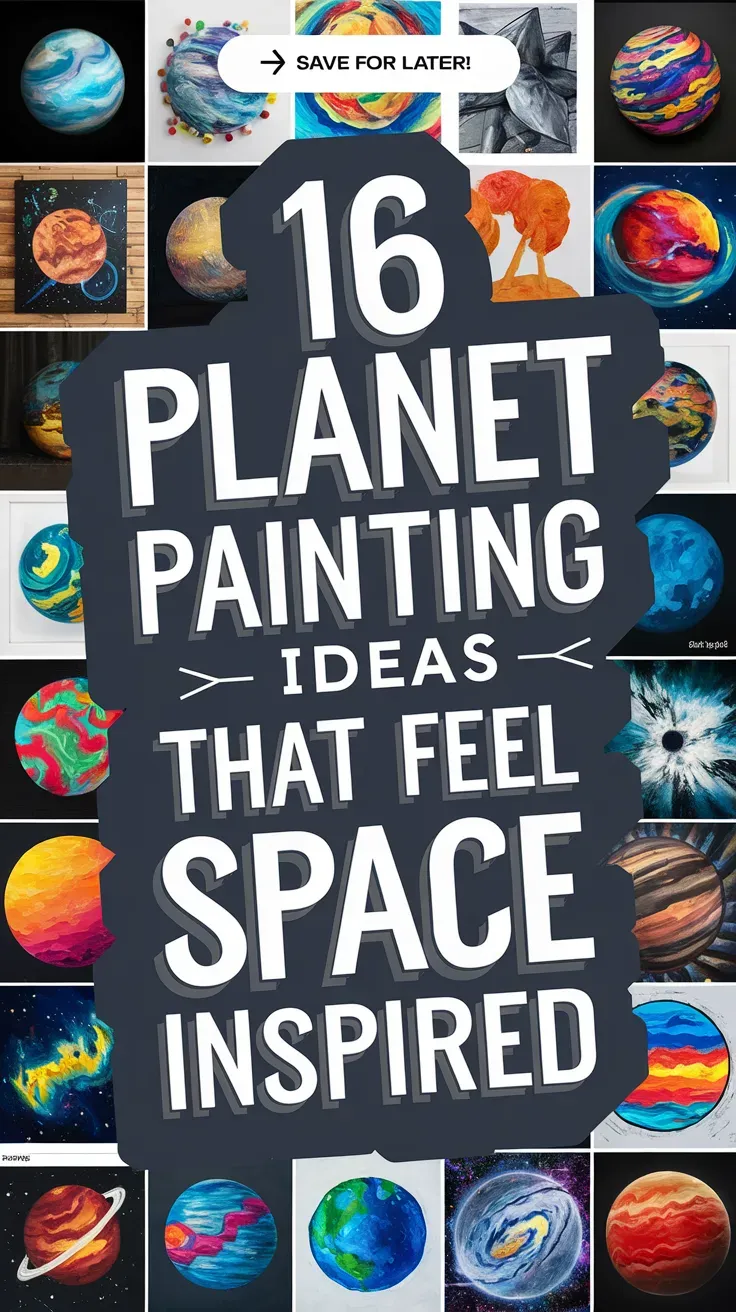
Here are 16 planet painting ideas to help you paint your own tiny universe on canvas.
1. Swirled Jupiter Canvas Painting
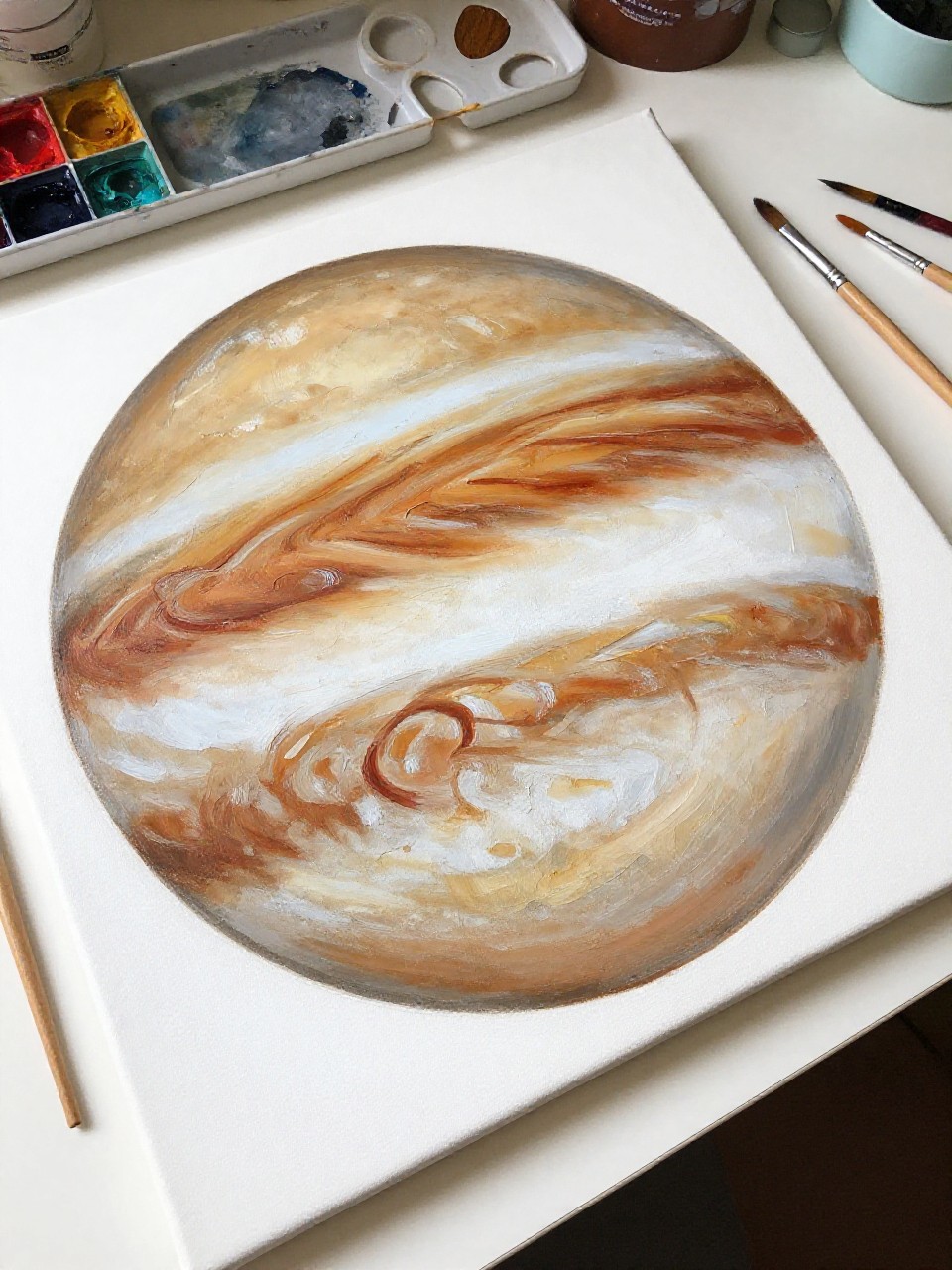
This canvas looks like a bold Jupiter with creamy tan, rusty orange, and brown bands that curve around the planet, plus a soft “Great Red Spot” swirl. It’s satisfying because you can blend colors slowly and watch the stripes come to life, even if you’re a beginner. It makes cozy, space-inspired wall art.
Materials Needed:

For People Who Love to Make Things ✂️
- Stretched canvas
- Acrylic paint (tan, brown, rust, white)
- Paintbrushes in multiple sizes
- Palette or paint tray
- Cup of water + paper towels
Steps to Make:
- Paint the background a deep navy or black and let it dry.
- Sketch a large circle for the planet and block it in with a warm tan base.
- Add curved bands in browns and rust, following the round shape of the circle.
- Blend edges with a damp brush and paint a loose red oval for the “spot.”
- Add thin white highlights on a few bands, then let dry before hanging.
2. Pastel Saturn Rings Canvas Art
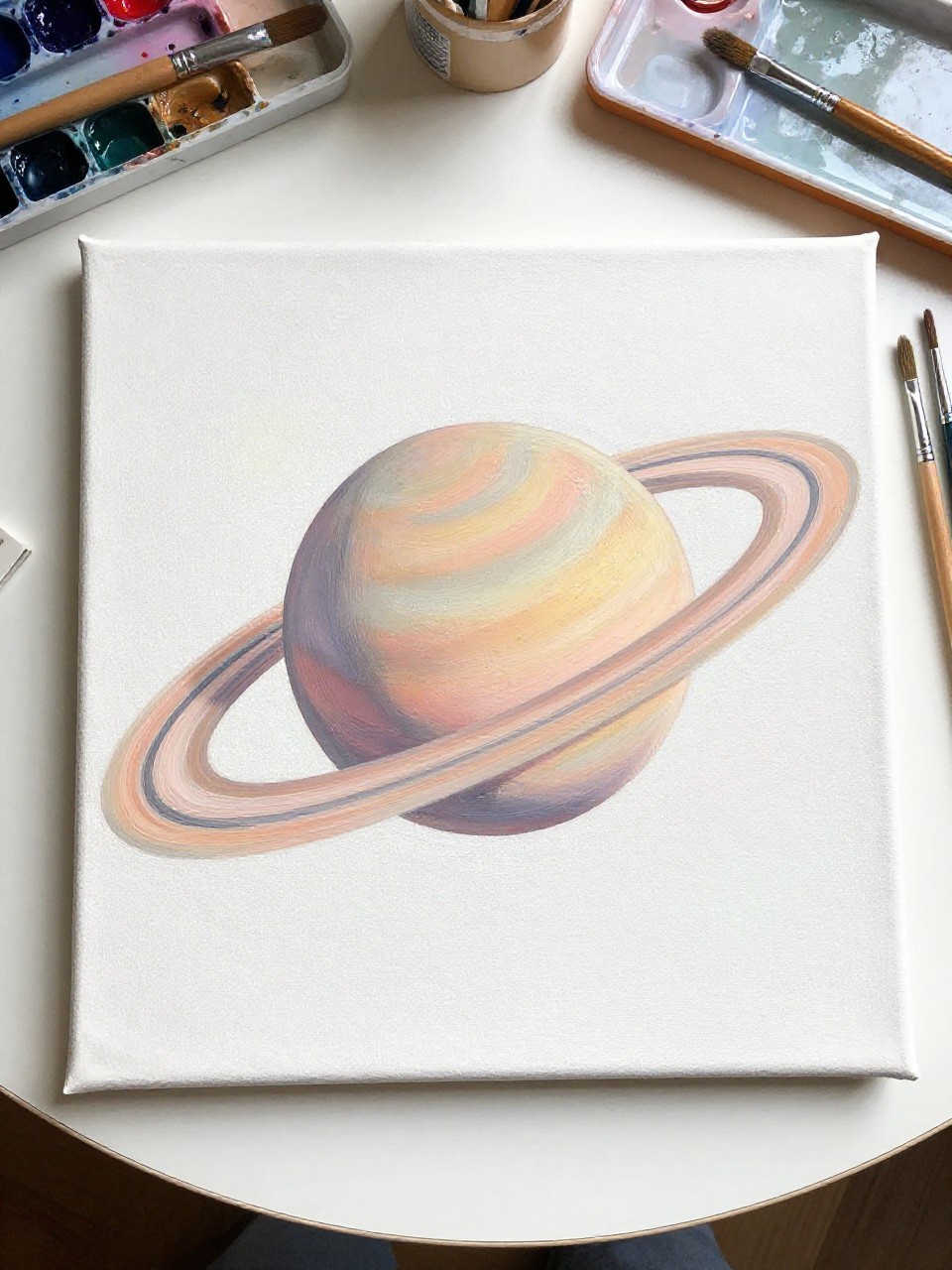
This painting shows a pastel Saturn floating on a dark sky, with wide rings painted in soft peach, pink, and pale gold that wrap around the planet. It’s great for beginners because the shapes are simple, and the rings are forgiving if they’re a little uneven. The finished look feels calm and dreamy.
Materials Needed:
- Stretched canvas
- Acrylic paint (black, pink, peach, white, gold)
- Paintbrushes in multiple sizes
- Palette or paint tray
- Optional sealer or varnish
Steps to Make:
- Paint the whole canvas a dark night-sky color and let it dry.
- Paint a circle for Saturn in a pale pastel color and add a darker shadow edge.
- Lightly sketch two ring ovals that cross in front and behind the planet.
- Fill the rings with pastel bands, leaving small breaks for a hand-painted look.
- Dot a few tiny stars, then seal once the paint is fully dry.
3. Earth From Space Canvas Painting
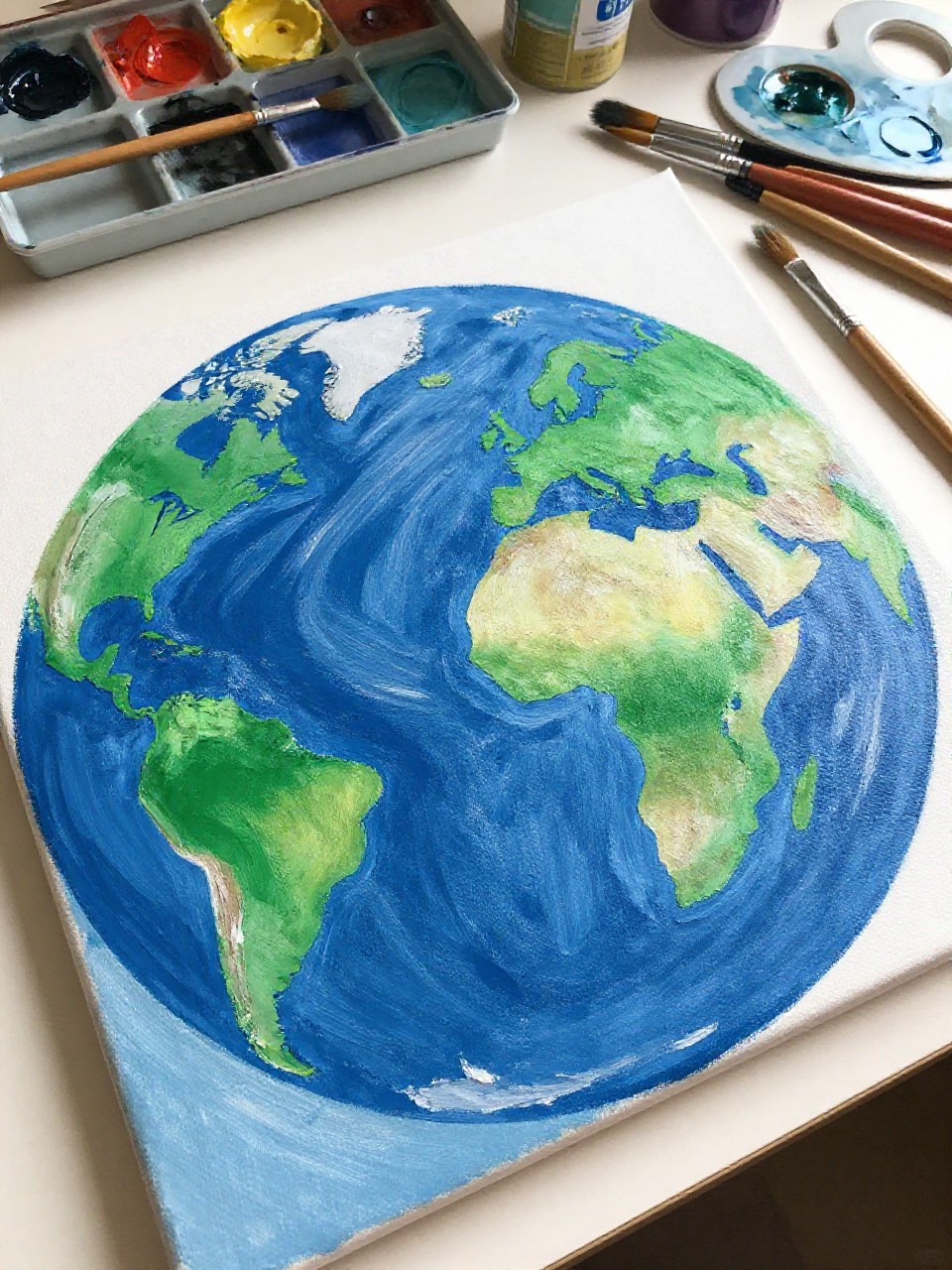
This canvas shows Earth with deep blue oceans, green land shapes, and soft white cloud streaks, all glowing against a black background. It’s relaxing because you can paint in gentle layers without worrying about perfect geography. It’s also a sweet project for kids’ rooms or a simple gallery wall.
Materials Needed:
- Stretched canvas
- Acrylic paint (black, blue, green, white)
- Paintbrushes in multiple sizes
- Palette or paint tray
- Optional sealer or varnish
Steps to Make:
- Paint the background black and add a few faint star dots while it’s still a bit tacky.
- Trace a circle and paint it a rich ocean blue.
- Add loose green land shapes, keeping edges soft and imperfect.
- Use a dry brush to sweep thin white cloud streaks across the surface.
- Add a light blue glow on one edge, dry, and seal for protection.
4. Crimson Mars Dust Canvas Painting
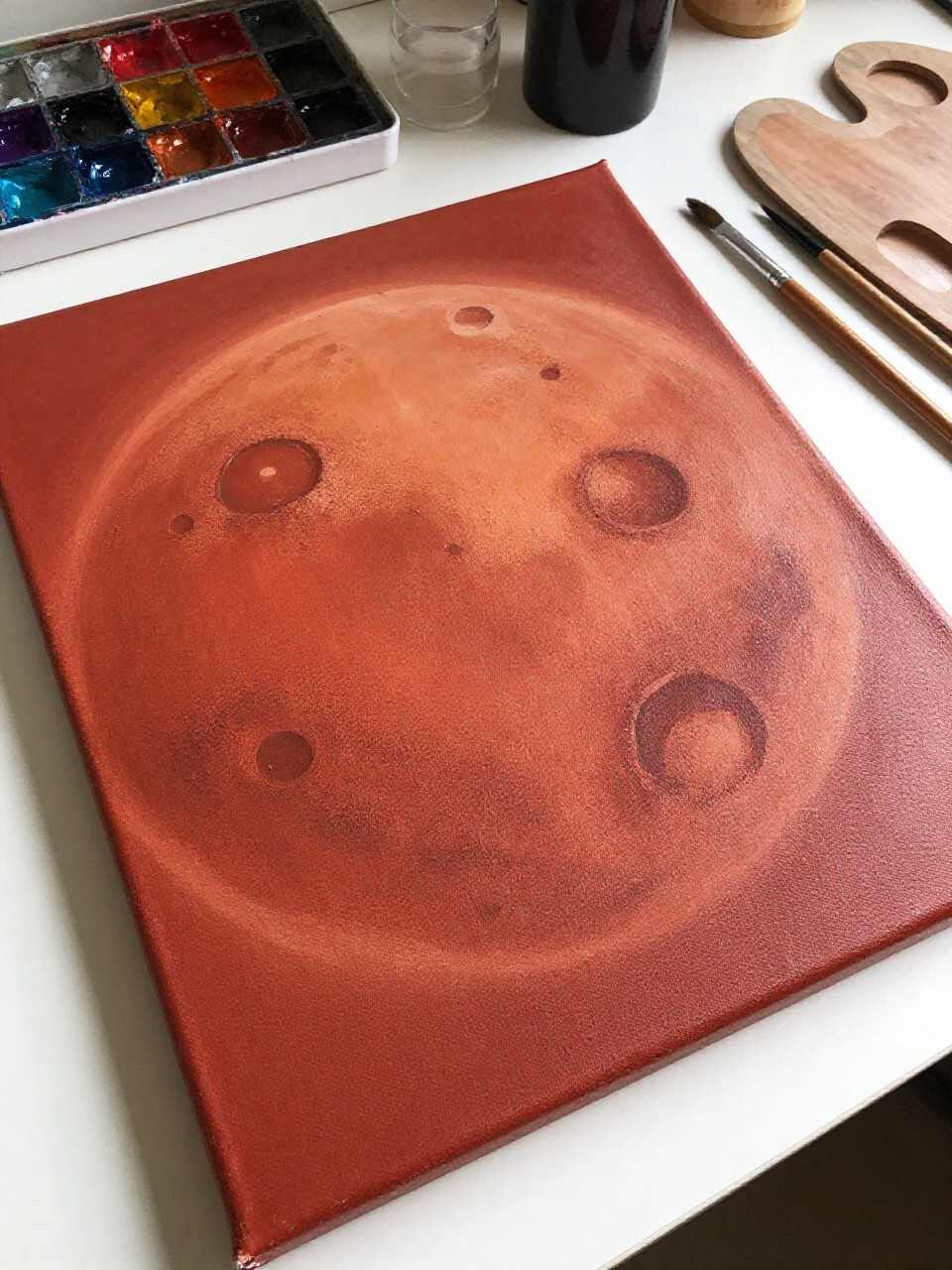
This painting features a rusty red Mars with dusty texture, darker crater marks, and a faint light edge that makes it feel round. It’s satisfying because you can use stippling (tiny taps of paint) to build a rocky look without detailed drawing. The warm colors feel cozy and bold on a wall.
Materials Needed:
- Stretched canvas
- Acrylic paint (brick red, burnt umber, black, white)
- Paintbrushes in multiple sizes
- Palette or paint tray
Steps to Make:
- Paint a dark space background and let it dry fully.
- Paint a circle in brick red and blend a darker shadow along one side.
- Stipple burnt umber and black to create crater-like spots and dusty patches.
- Dry-brush a little white on the bright edge to create a round highlight.
- Add a few tiny stars around it, then let the canvas cure overnight.
5. Icy Neptune Glow Canvas Painting
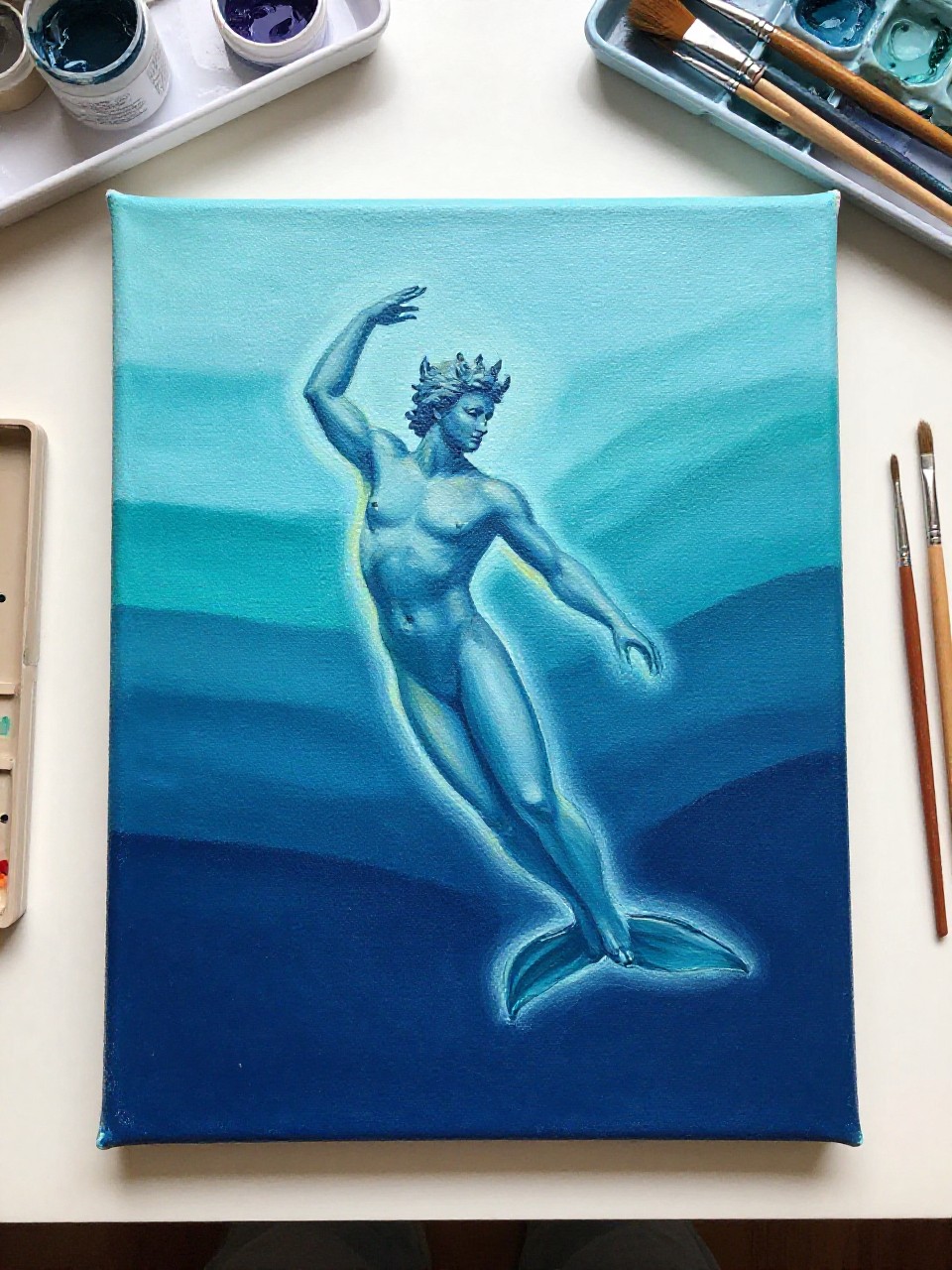
This canvas shows a cool blue Neptune with soft, blended bands and a gentle glowing rim, like it’s lit from the side. It’s a calming project because you can spend time blending blues and adding quiet details. It’s also a great way to practice smooth gradients without needing perfect lines.
Materials Needed:
- Stretched canvas
- Acrylic paint (navy, teal, light blue, white, black)
- Paintbrushes in multiple sizes
- Palette or paint tray
Steps to Make:
- Paint the background dark and add a few blurred star clusters.
- Block in a circle with navy and teal, keeping the paint slightly wet for blending.
- Add lighter blue bands across the planet, curving them to match the sphere.
- Blend with a clean brush, then add a thin white rim highlight on one side.
- Let dry flat so the blended paint doesn’t drip.
6. Uranus Mint Mist Canvas Painting
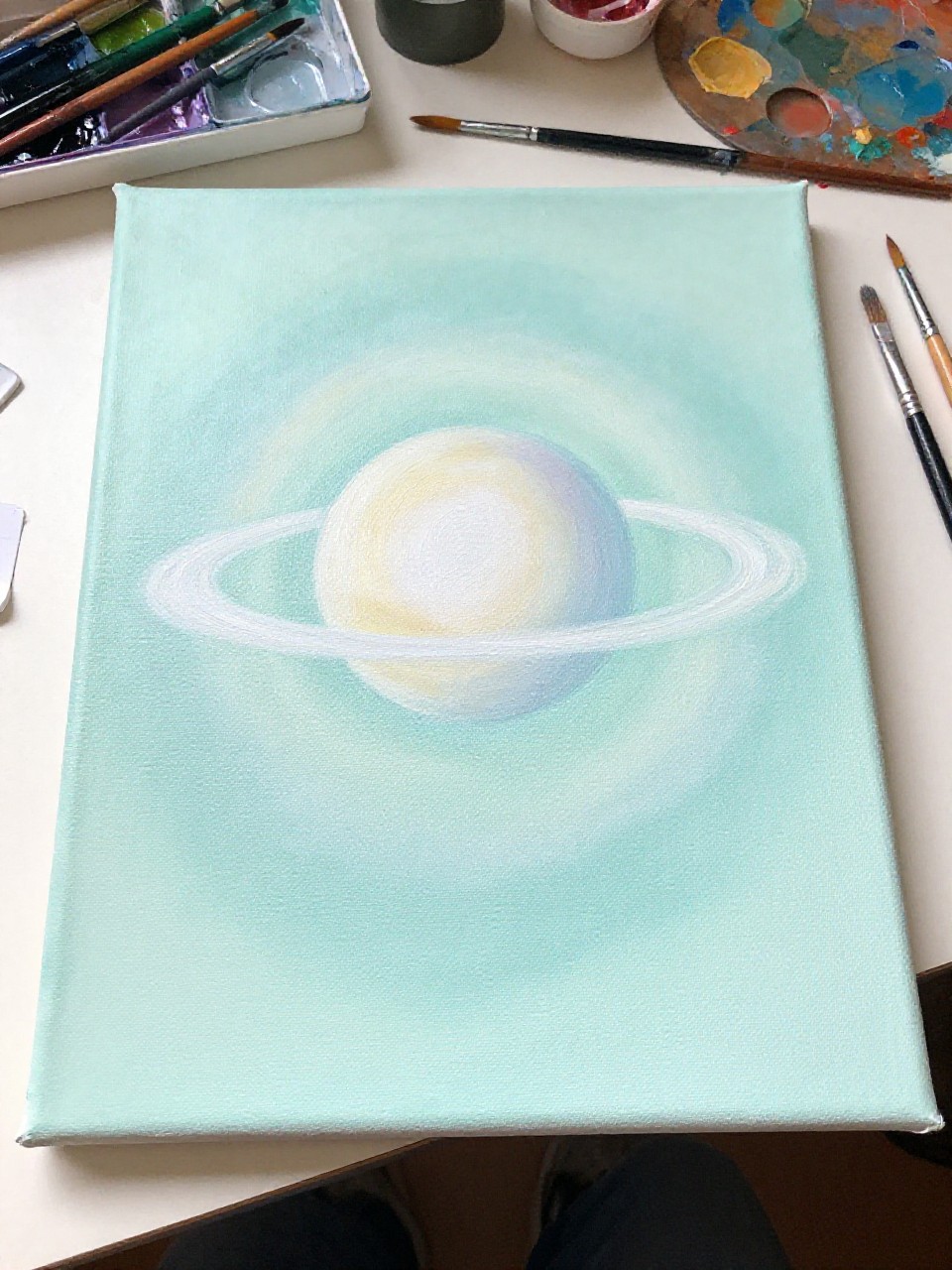
This painting shows Uranus in pale mint and icy aqua with a smooth, misty look and a few faint rings or haze lines. It’s perfect for beginners who want a simple color palette that still looks special. The soft tones feel peaceful and look great in a minimalist room.
Materials Needed:
- Stretched canvas
- Acrylic paint (mint, aqua, white, gray, black)
- Paintbrushes in multiple sizes
- Palette or paint tray
- Optional sealer or varnish
Steps to Make:
- Paint a charcoal-to-black background gradient and dry it completely.
- Paint a circle in pale aqua and blend white toward the center for a misty glow.
- Add very faint curved lines or haze bands using watered-down gray paint.
- Deepen one shadow edge with a thin gray glaze to make it feel round.
- Let dry, then seal for a smooth finished look.
7. Venus Golden Clouds Canvas Painting
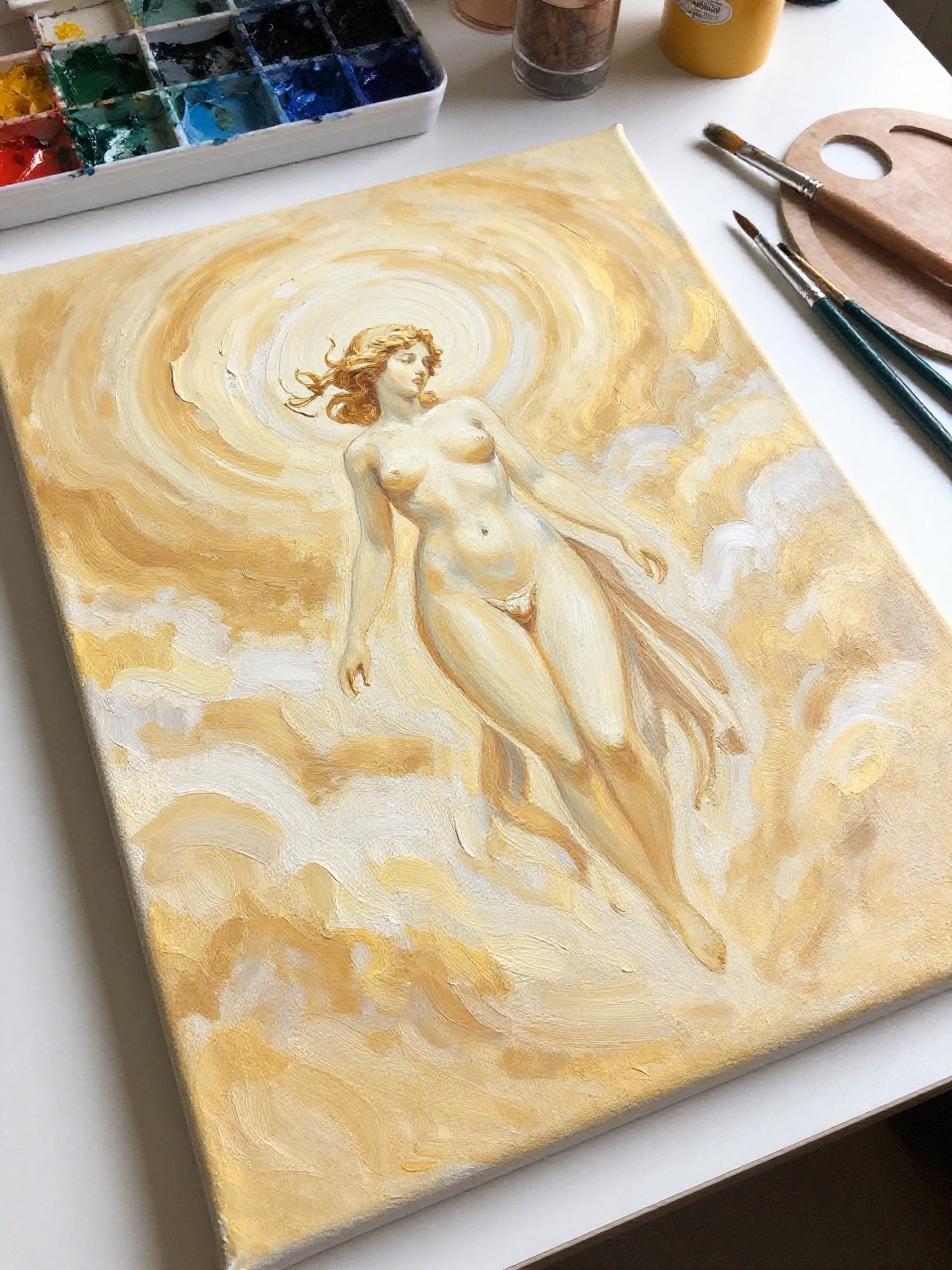
This canvas looks like Venus painted in warm golds, creams, and soft browns, with cloudy swirls that feel thick and creamy. It’s relaxing because the cloud shapes can be loose and abstract, so you don’t have to be precise. The warm colors brighten up a craft room or hallway.
Materials Needed:
- Stretched canvas
- Acrylic paint (cream, ochre, brown, white, black)
- Paintbrushes in multiple sizes
- Palette or paint tray
Steps to Make:
- Paint a dark background and let it dry.
- Paint a circle in creamy ochre as the base planet color.
- Add swirling cloud shapes using lighter cream and deeper brown, curving them around.
- Use a small brush to add a few thicker, brighter streaks for depth.
- Clean up the circle edge, then dry before displaying.
8. Mercury Stone Texture Canvas Painting
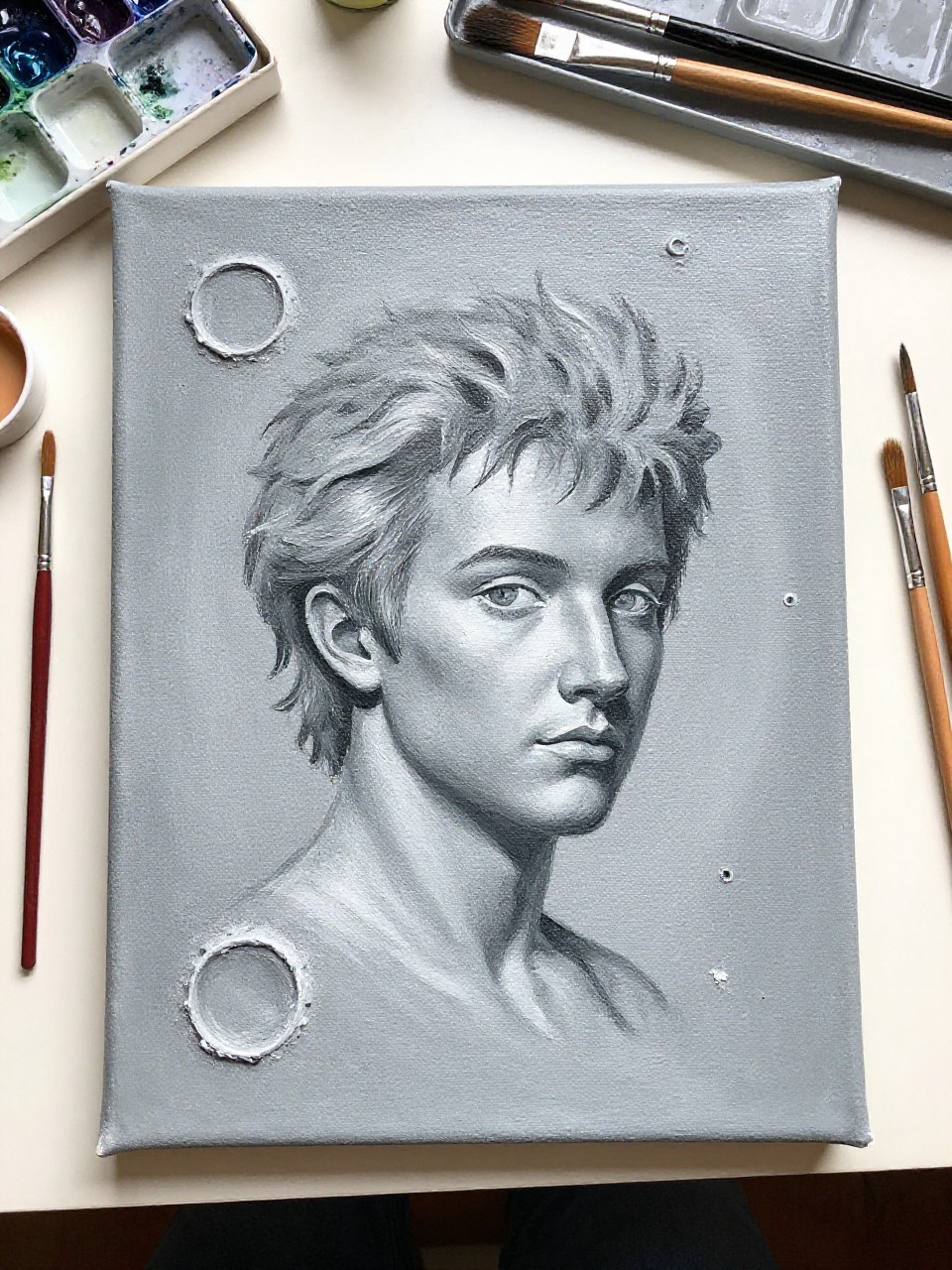
This painting shows Mercury as a gray rocky planet with speckled texture and scattered crater circles. It’s great for beginners because you can use simple dabbing and dry-brushing to get a stone look fast. The neutral colors also make it easy to match with any room decor.
Materials Needed:
- Stretched canvas
- Acrylic paint (gray, white, black, a little brown)
- Paintbrushes in multiple sizes
- Palette or paint tray
- Sponge piece (optional)
Steps to Make:
- Paint the background black and add a few tiny star dots.
- Paint a circle in medium gray, then blend darker gray on one side for shadow.
- Use a sponge or stippling brush to dab lighter and darker speckles for rocky texture.
- Paint a few crater rings with a thin brush and add small shadow crescents.
- Let dry, then add a final bright highlight edge for dimension.
9. Galaxy Planet With Starfield Canvas Painting
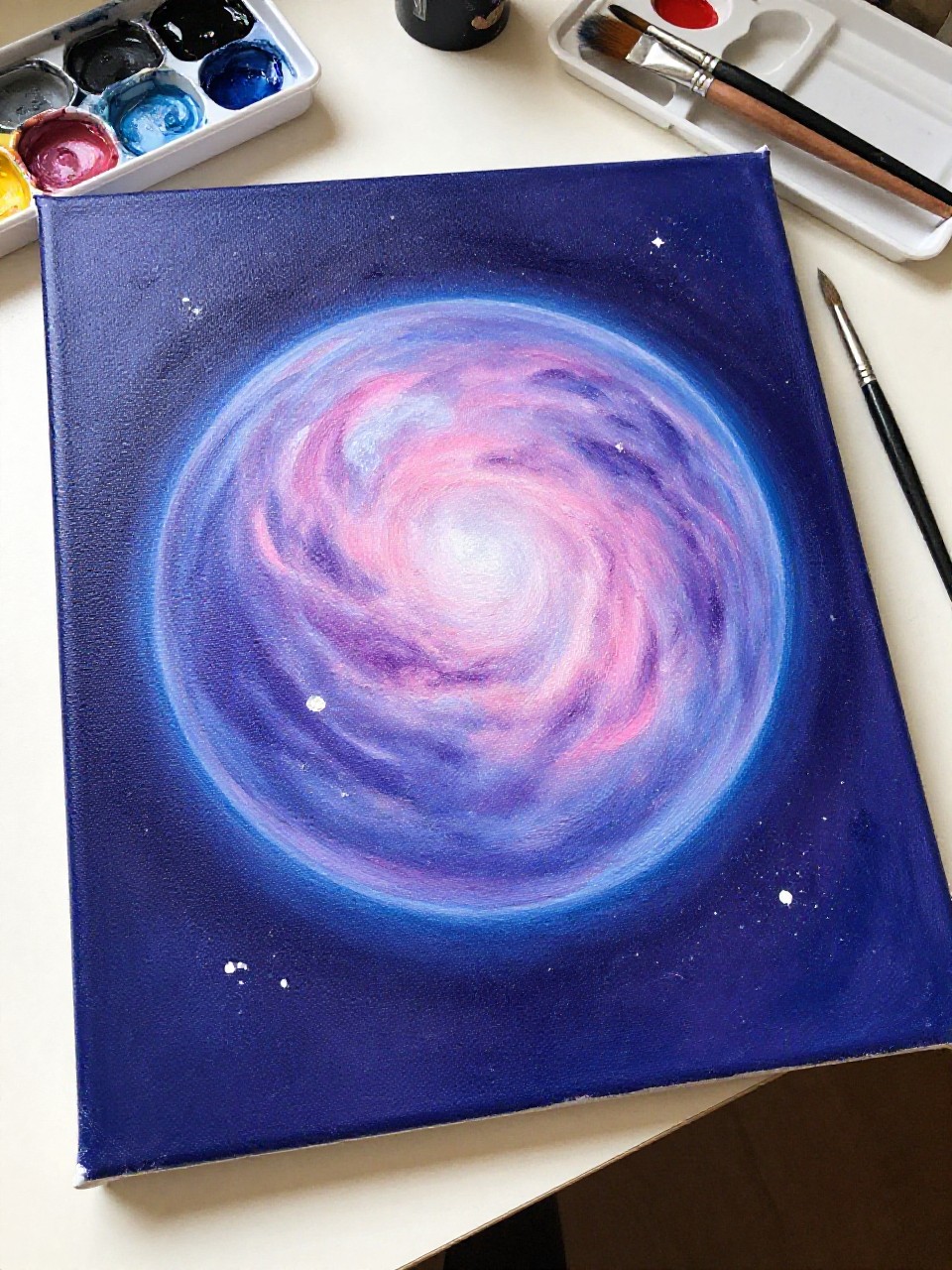
This canvas shows one big planet filled with a mini galaxy—purples, blues, and pinks blended together—with white star splatters across the surface. It’s satisfying because you can play with color blending and make it look magical even if it’s messy. It’s a fun weekend project when you want something bold.
Materials Needed:
- Stretched canvas
- Acrylic paint (black, purple, blue, pink, white)
- Paintbrushes in multiple sizes
- Palette or paint tray
- Old toothbrush for splatter (optional)
Steps to Make:
- Paint the full background black and let it dry.
- Paint a large circle and fill it with blended purple, blue, and pink patches.
- Deepen a few areas with extra dark paint to create a “space cloud” feel.
- Flick thinned white paint for stars and add a few larger dots by hand.
- Add a soft rim highlight to finish, then dry flat.
10. Moonlit Planet Horizon Canvas Painting
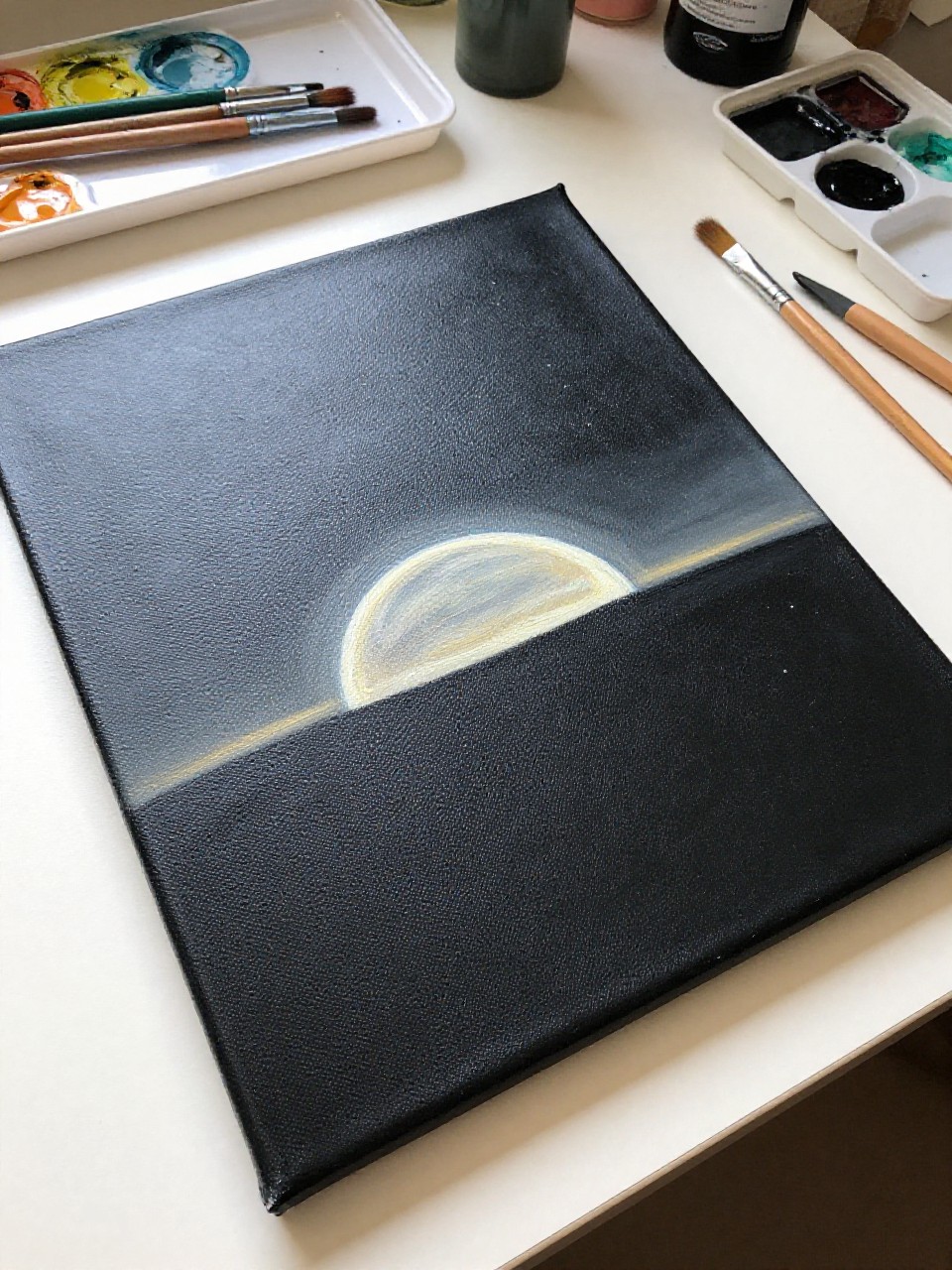
This painting shows a planet rising over a dark horizon line, with a glowing edge and a few tiny stars above it. It’s great if you like simple shapes because the horizon hides the bottom half of the circle, so it feels easier. The finished canvas looks calm and a little cinematic.
Materials Needed:
- Stretched canvas
- Acrylic paint (black, indigo, gray, white)
- Paintbrushes in multiple sizes
- Palette or paint tray
- Optional sealer or varnish
Steps to Make:
- Paint a dark sky gradient from indigo to black.
- Tape or lightly mark a horizon line across the lower third of the canvas.
- Paint a large circle so it “peeks” over the horizon, then shade it with gray tones.
- Add a thin bright rim where the planet meets the sky, like a glow.
- Dot stars, remove tape if used, then seal after drying.
11. Two-Tone Eclipse Planet Canvas Painting
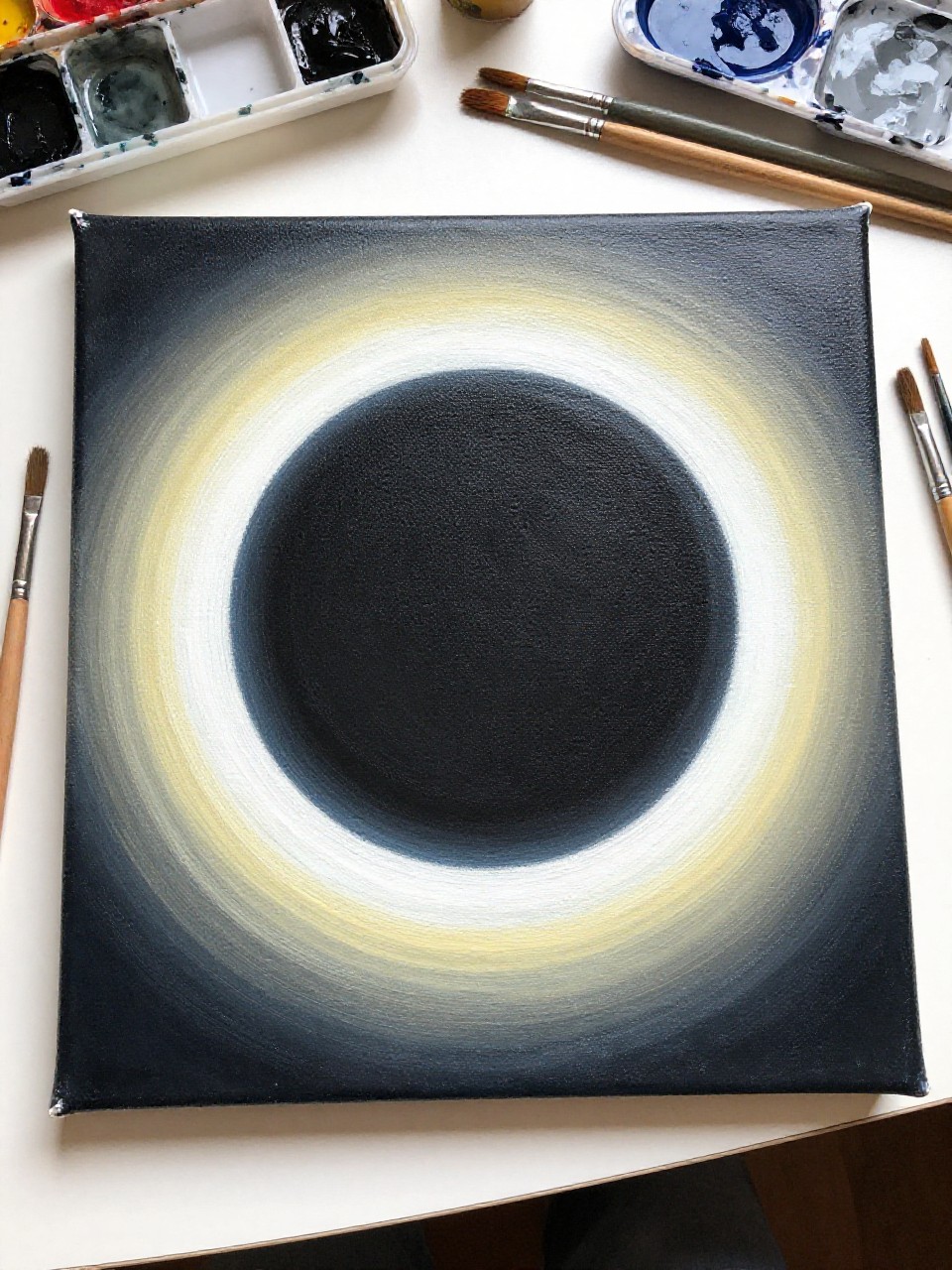
This canvas shows a dramatic eclipse: a dark planet in front, with a bright halo ring glowing behind it in white and pale yellow. It’s satisfying because the design is simple but looks impressive, even for beginners. The high contrast makes it pop from across the room.
Materials Needed:
Stretched canvas
Acrylic paint (black, white, pale yellow, gray)
Paintbrushes in multiple sizes
Palette or paint tray
Optional sealer or varnish
Steps to Make:
Paint the background black and blend a faint gray haze in the center.
Paint a soft glowing circle using white mixed with pale yellow.
Once dry, paint a smaller dark circle centered over it to create the eclipse.
Add a brighter halo edge with short strokes, leaving brush texture visible.
Add a few stars, then seal when fully dry.
12. Candy-Colored Fantasy Planet Canvas Painting
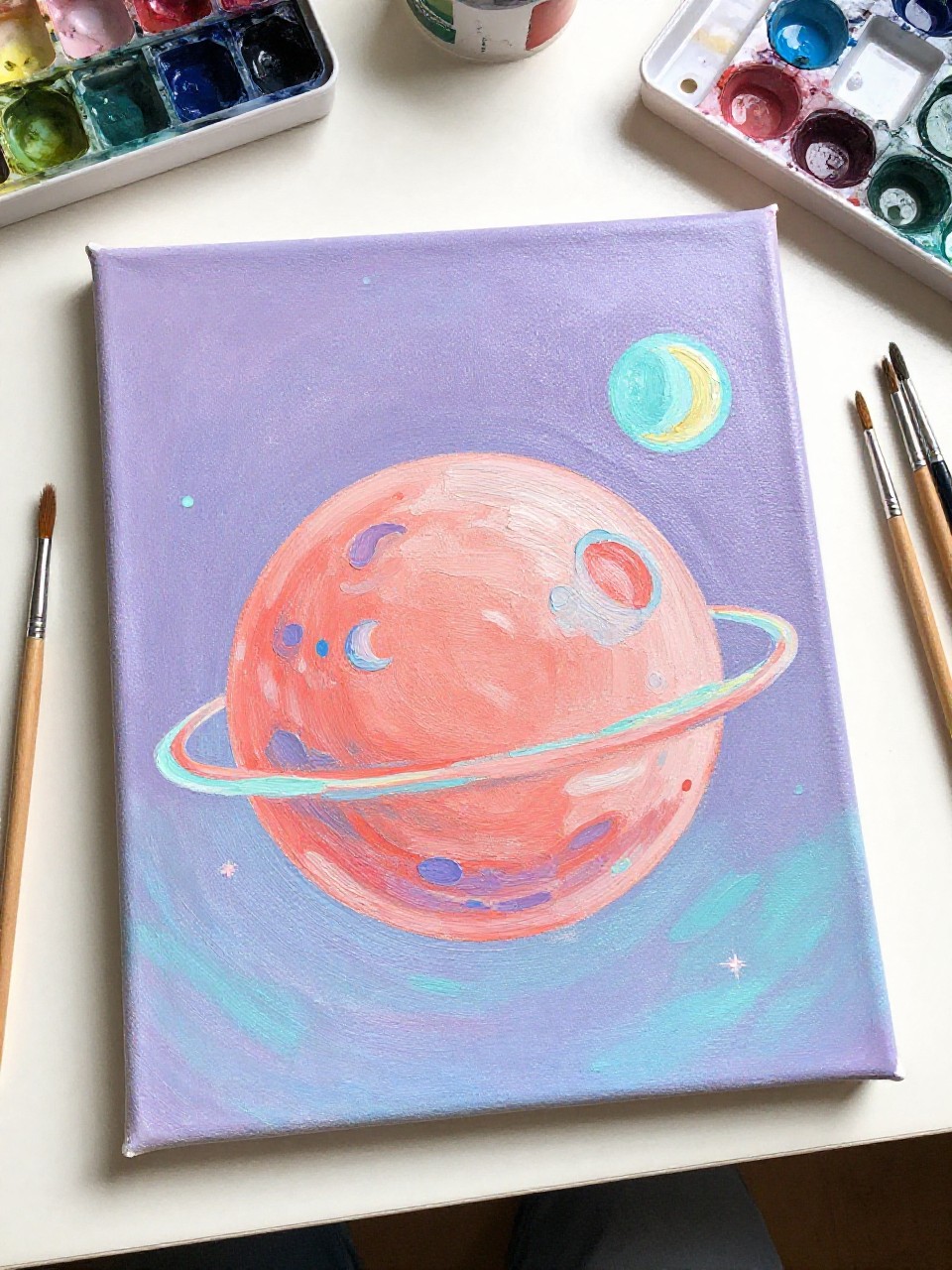
This painting shows a playful planet in candy colors—coral, lavender, and turquoise—plus tiny moons and sparkly dots around it. It’s great for beginners who want to have fun and not worry about realism. The cheerful colors make it cute decor for a bedroom or craft corner.
Materials Needed:
Stretched canvas
Acrylic paint (coral, lavender, turquoise, white, black)
Paintbrushes in multiple sizes
Palette or paint tray
Steps to Make:
Paint the background a deep color like black or dark purple.
Paint a large circle in coral, then blend lavender and turquoise patches into it.
Add a few small moon circles nearby in lighter shades.
Paint simple dot “sparkles” and tiny curved lines to suggest motion.
Let dry, then touch up highlights so the planet looks round.
13. Ringed Ice Giant With Speckles Canvas Painting
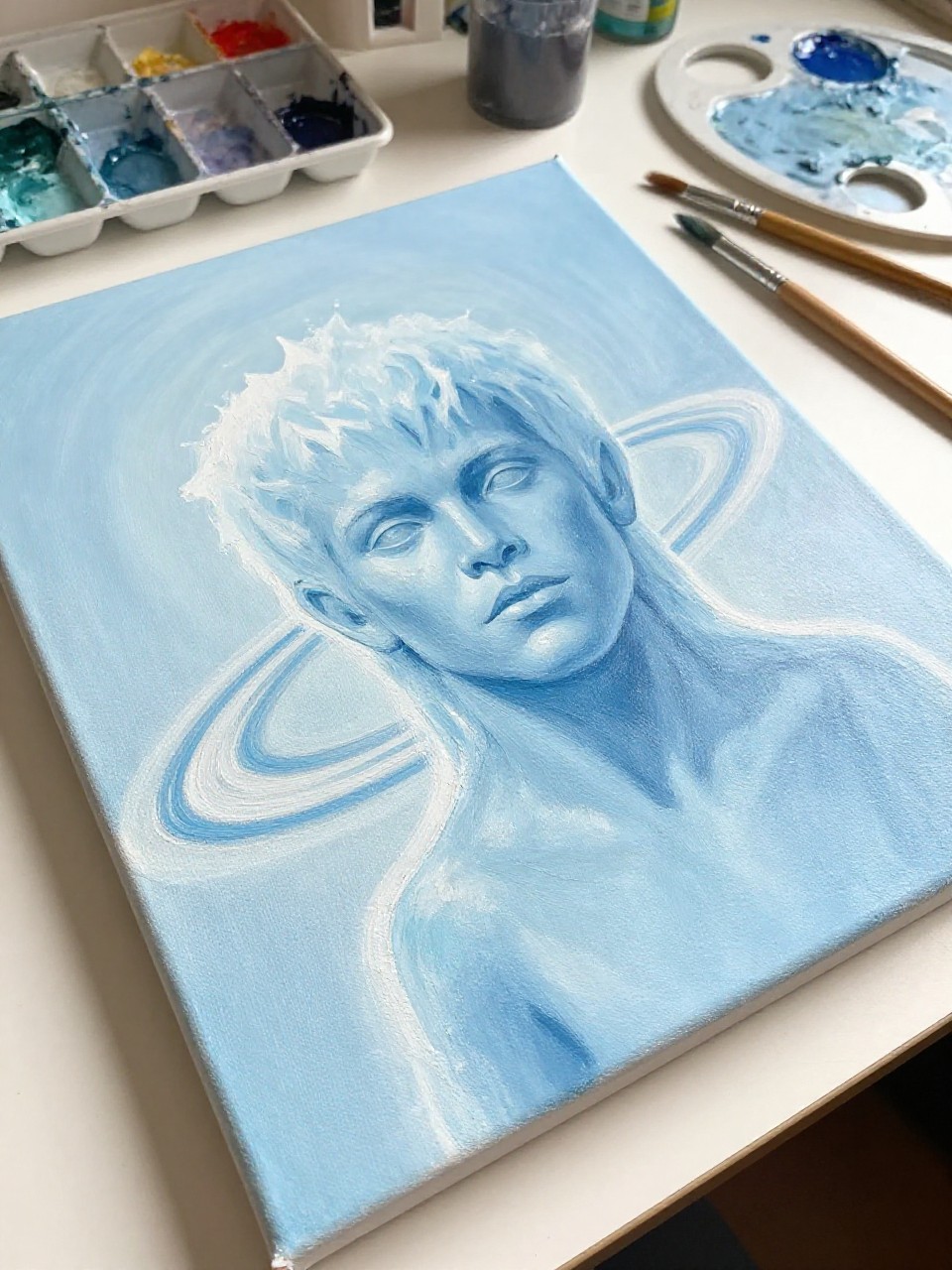
This canvas shows a pale ice giant with thin, hand-painted rings and speckled “ice” texture across the planet surface. It’s relaxing because you can build up the speckles slowly and see the texture appear with each layer. The delicate rings also help you practice light brush control in a low-stress way.
Materials Needed:
Stretched canvas
Acrylic paint (pale blue, white, gray, black)
Paintbrushes in multiple sizes
Palette or paint tray
Optional sealer or varnish
Steps to Make:
Paint a dark background and add a soft gray nebula patch behind the planet.
Paint a circle in pale blue and blend white toward the light side.
Flick or stipple white speckles across the planet for an icy look.
Paint thin ring lines in light gray, curving them around the planet shape.
Dry completely, then seal to protect the delicate details.
14. Minimal Linework Planets Canvas Painting
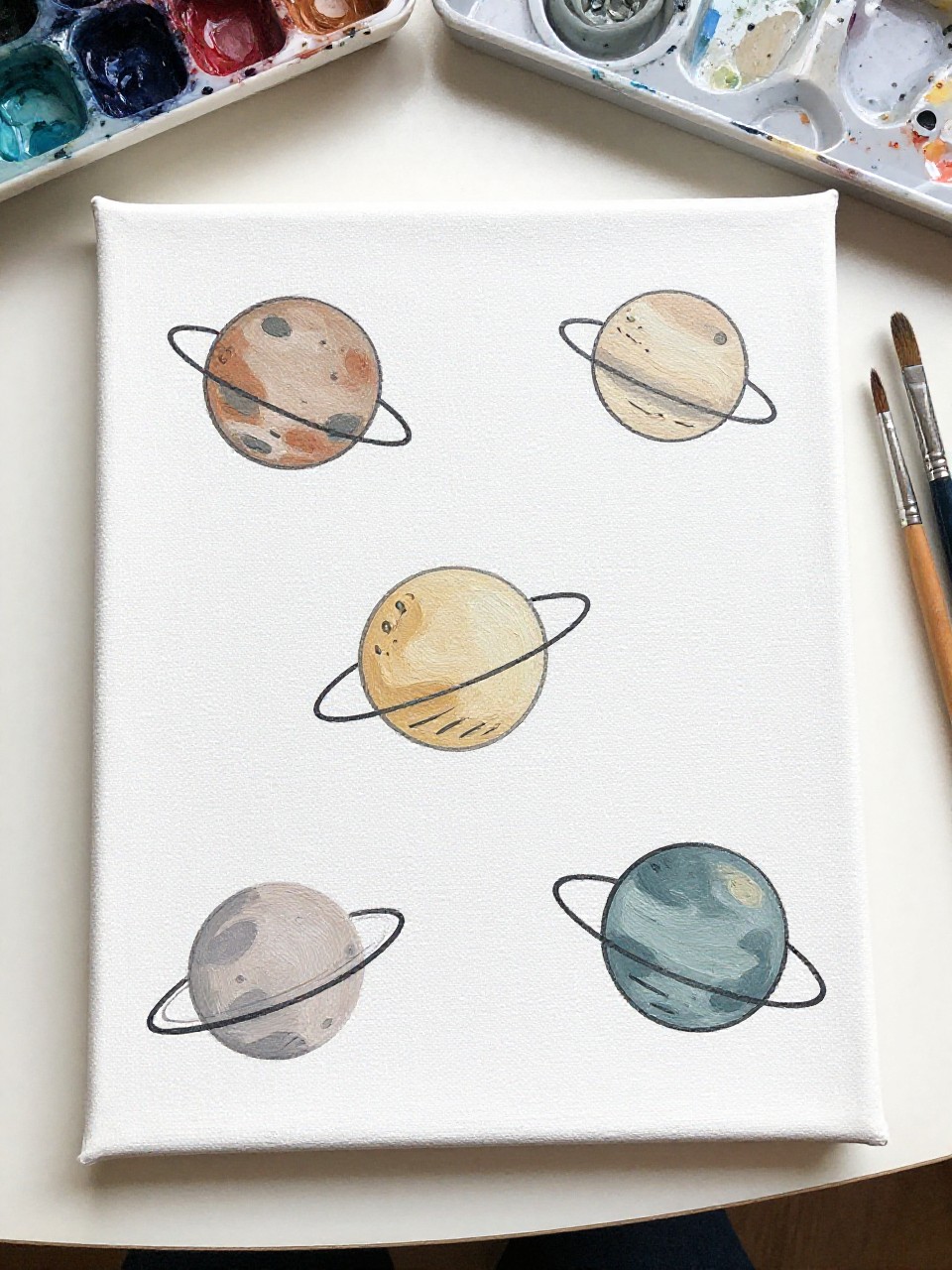
This canvas shows a set of small planets painted in muted colors, each outlined with thin linework and simple shading, like a clean little solar system study. It’s great for beginners who like neat designs but don’t want heavy blending. It also looks nice as simple modern wall art.
Materials Needed:
- Stretched canvas
- Acrylic paint (muted blue, muted beige, gray, black, white)
- Paintbrushes in multiple sizes
- Palette or paint tray
Steps to Make:
- Paint the background a solid dark color or a soft gradient.
- Lightly sketch 4–6 circles in different sizes across the canvas.
- Fill each planet with a flat muted color, leaving room for a shadow edge.
- Outline planets with thin black linework and add a few simple stripe details.
- Add tiny star dots, then let dry before hanging.
15. Textured Lava Planet Canvas Painting
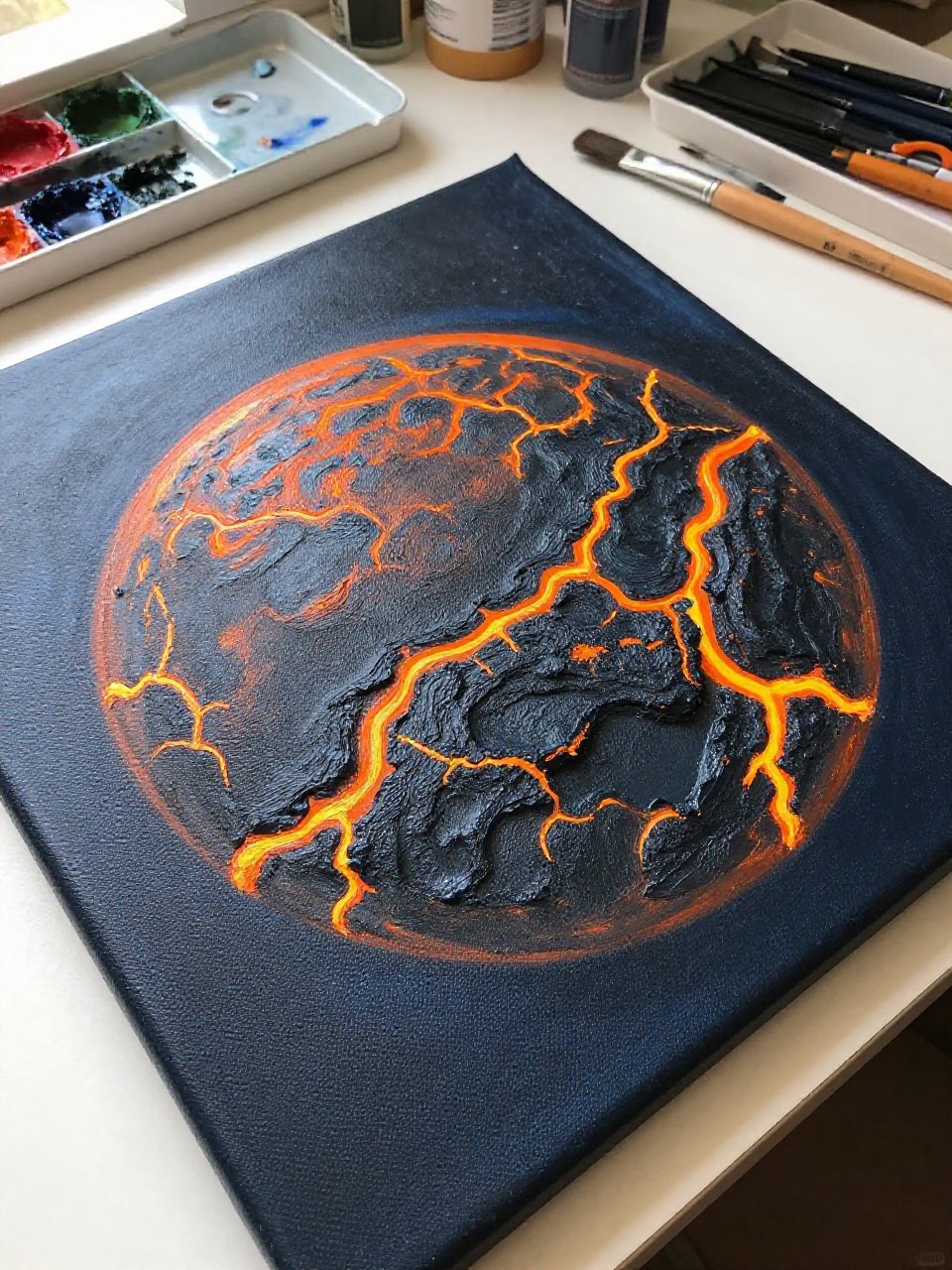
This canvas shows a dark volcanic planet with glowing lava cracks in orange and yellow, plus rough texture where thicker paint overlaps. It’s satisfying because you can layer paint heavily and make the surface feel rocky and real. Beginners can keep the cracks simple and still get a dramatic result.
Materials Needed:
- Stretched canvas
- Acrylic paint (black, dark gray, orange, yellow, white)
- Paintbrushes in multiple sizes
- Palette or paint tray
- Optional sealer or varnish
Steps to Make:
- Paint the planet circle in dark gray and black, leaving it slightly uneven for texture.
- While it’s drying, drag thicker paint to create rough rocky patches.
- Paint thin lava crack lines in orange, branching like little rivers.
- Add yellow highlights inside the cracks and a few bright spots near edges.
- Let dry fully, then seal to keep the thick texture protected.
16. Night Sky Planet Cluster Canvas Painting
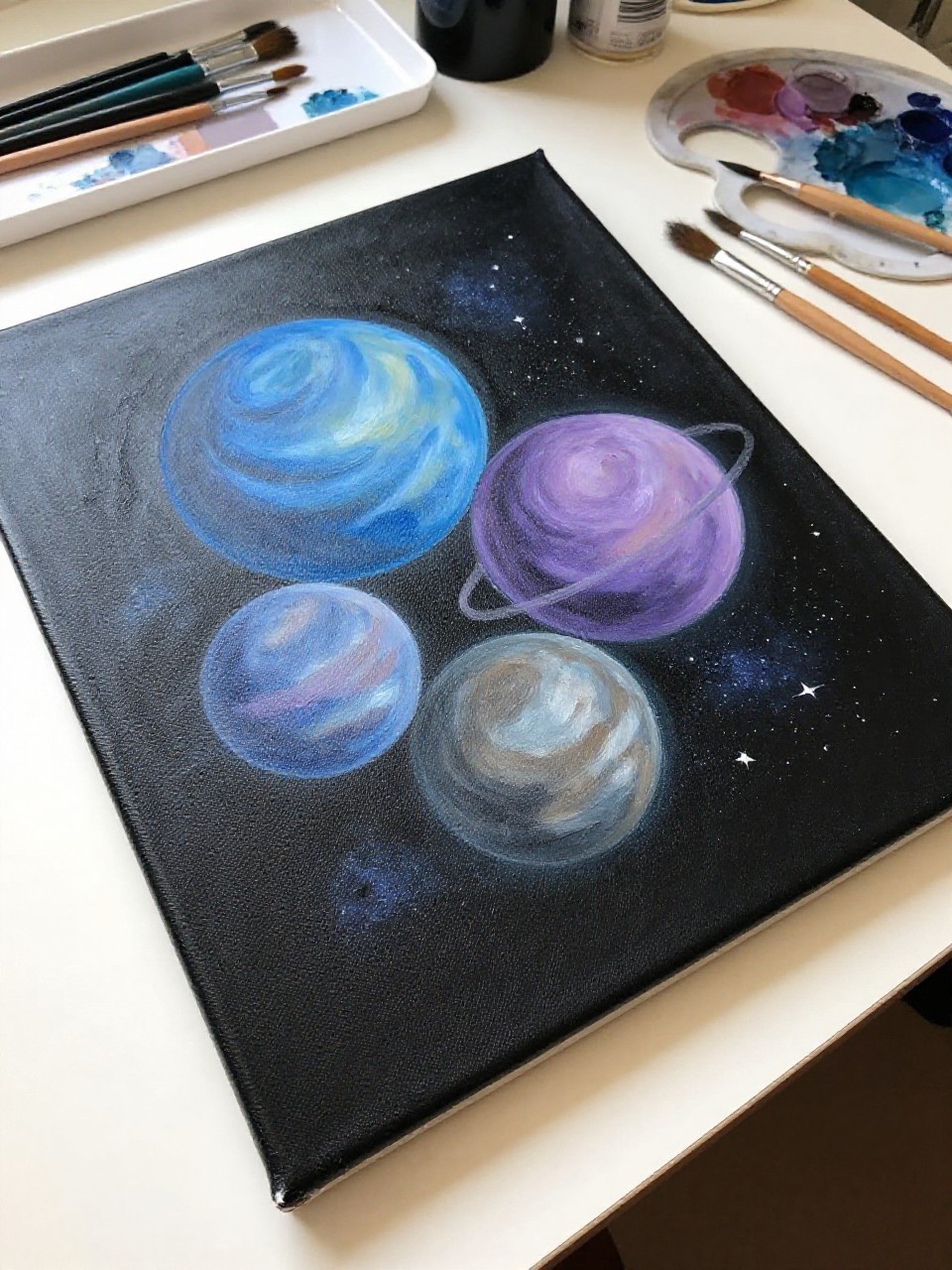
This canvas shows a cluster of three planets in different colors, spaced across a starry sky, with each planet shaded to look round and slightly different. It’s a comforting project because you can take your time and paint one planet at a time, like little mini wins. The finished piece fills a wall nicely without being complicated.
Materials Needed:
- Stretched canvas
- Acrylic paint (black, blue, purple, gray, white)
- Paintbrushes in multiple sizes
- Palette or paint tray
Steps to Make:
- Paint the background black and blend a soft blue-purple haze in a few areas.
- Sketch three circles in different sizes and place them in a pleasing triangle layout.
- Paint each planet a different base color and add a shadow edge on the same side.
- Add simple surface details like bands, speckles, or cloudy swirls on each one.
- Splatter or dot stars, then let dry and display on a shelf or wall.