




Table of Contents Show
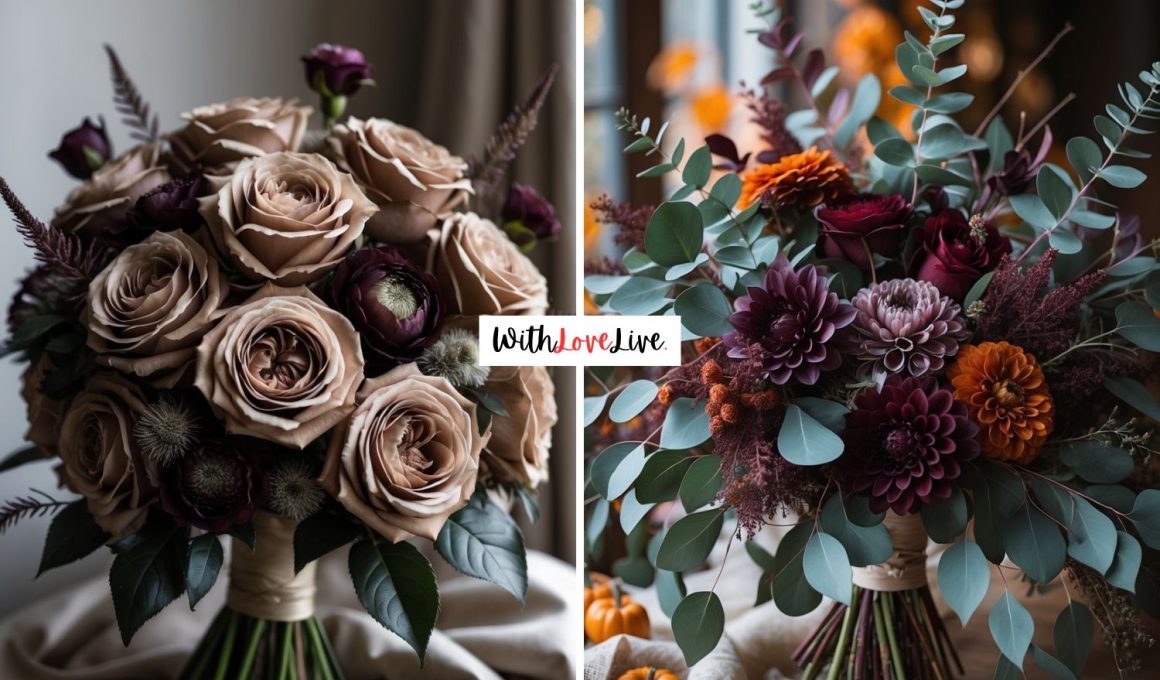
You want wedding flowers that feel rich, moody, and full of texture. I’ll show you how deep tones, shadowy greens, and unexpected accents can turn bouquets and centerpieces into a bold style choice that matches a dark romantic vibe.
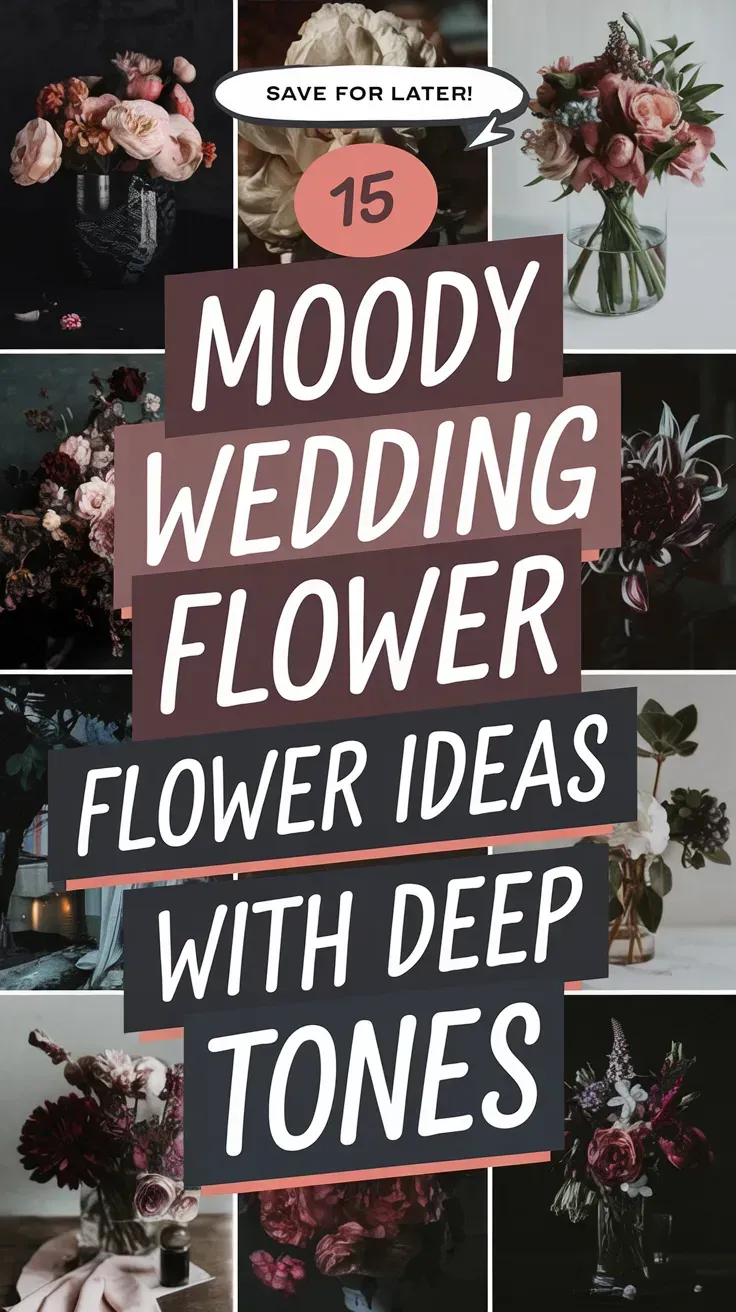
You’ll find 15 practical ideas that mix deep blooms, contrasty foliage, and striking accents so you can build a cohesive, moody floral look for your wedding. I’ll guide you through classic choices like burgundy roses and black calla lilies, plus textured details like dried pods and metallic succulents to help you shape the mood you want.
1. Burgundy Roses
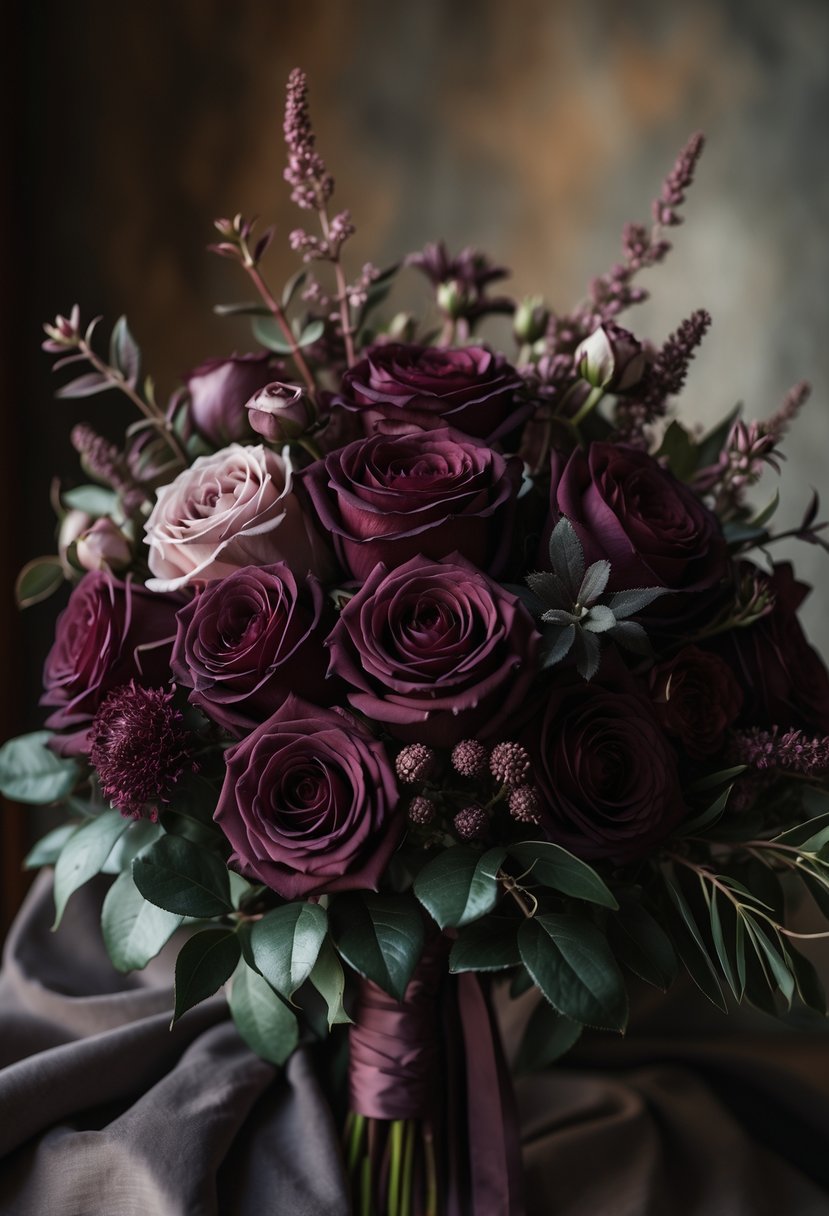
I love burgundy roses for a moody wedding; they feel rich and elegant.
They pair well with dark foliage and soft neutrals to keep the look balanced.
I often use them as focal blooms in bouquets and centerpieces.
2. Black Calla Lilies
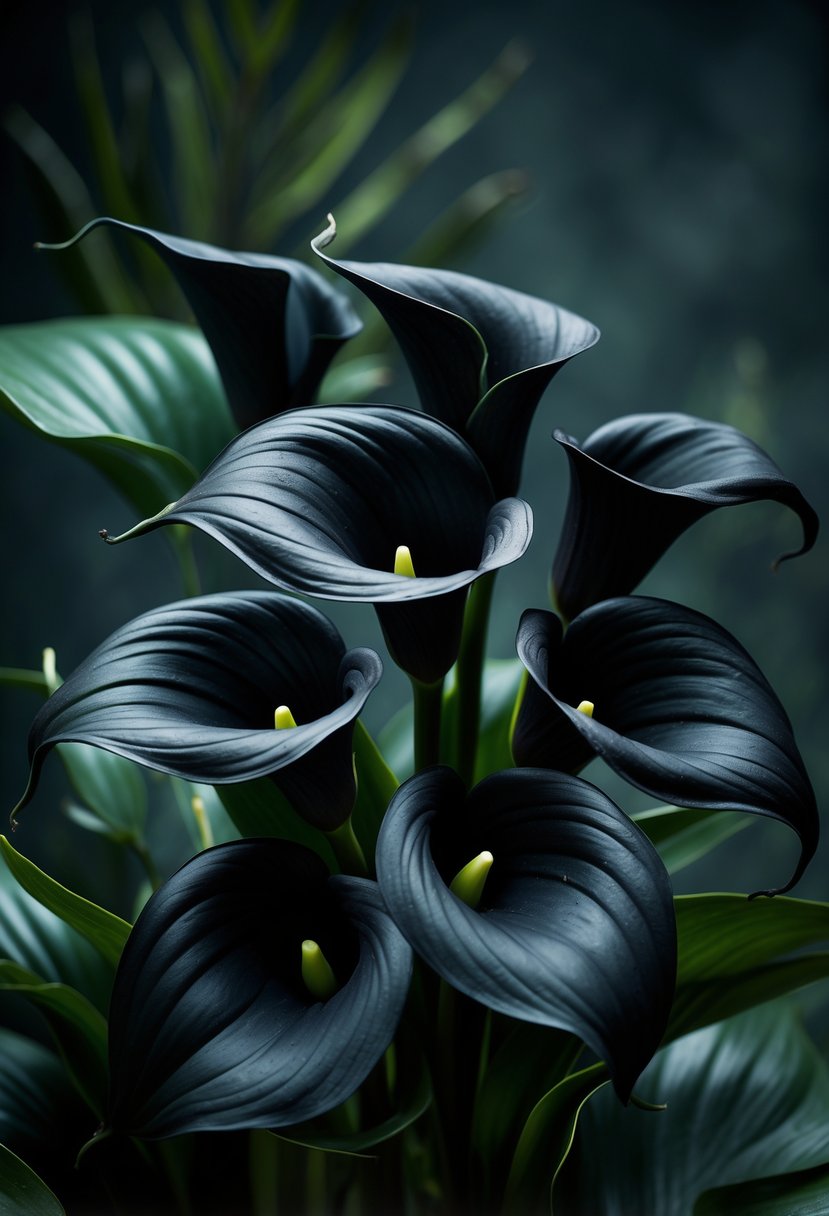
I choose black calla lilies for their sleek, dramatic shape and deep hue.
They pair well with burgundy roses or soft eucalyptus for contrast.
I use them to add bold, modern flair without losing elegance.
3. Dark Purple Ranunculus
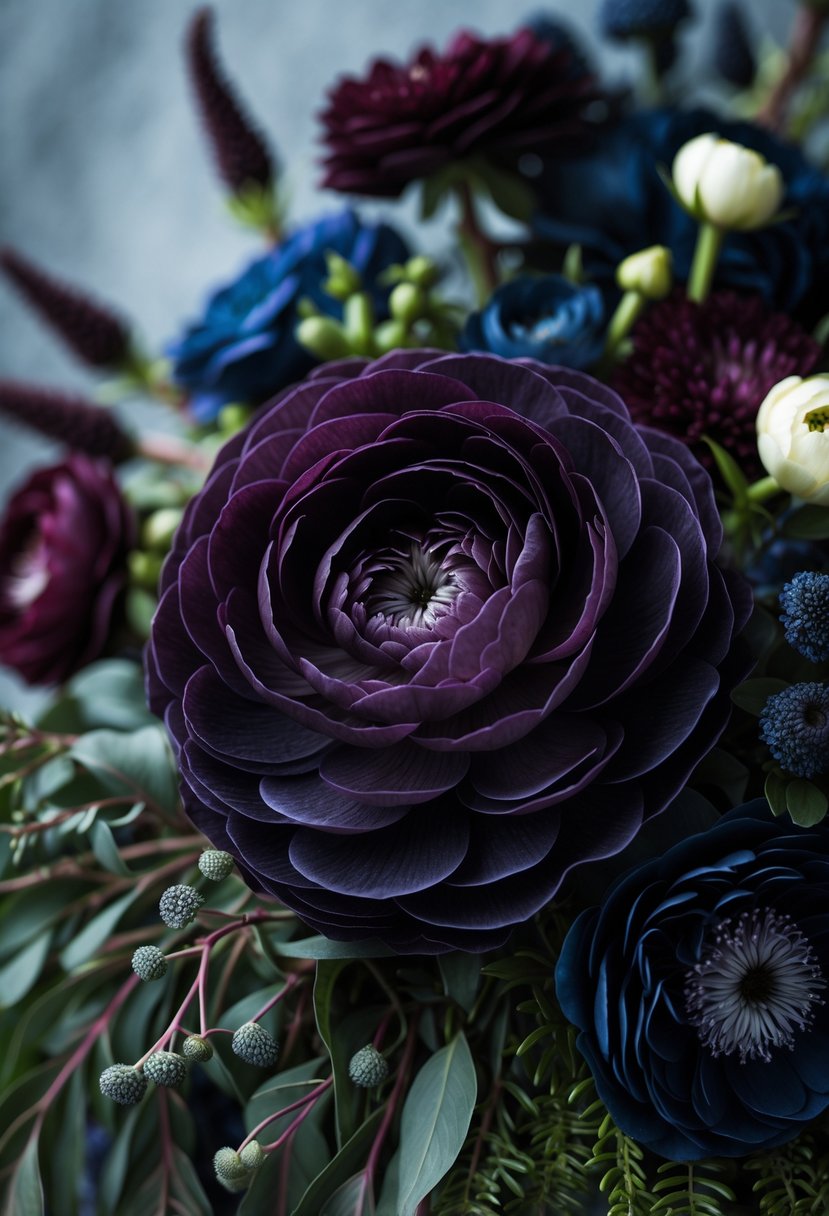
I love dark purple ranunculus for moody bouquets because their layered petals look rich and elegant.
They pair well with burgundy roses, black calla lilies, or textured greens to add depth and contrast.

For People Who Love to Make Things ✂️
4. Deep Red Dahlias
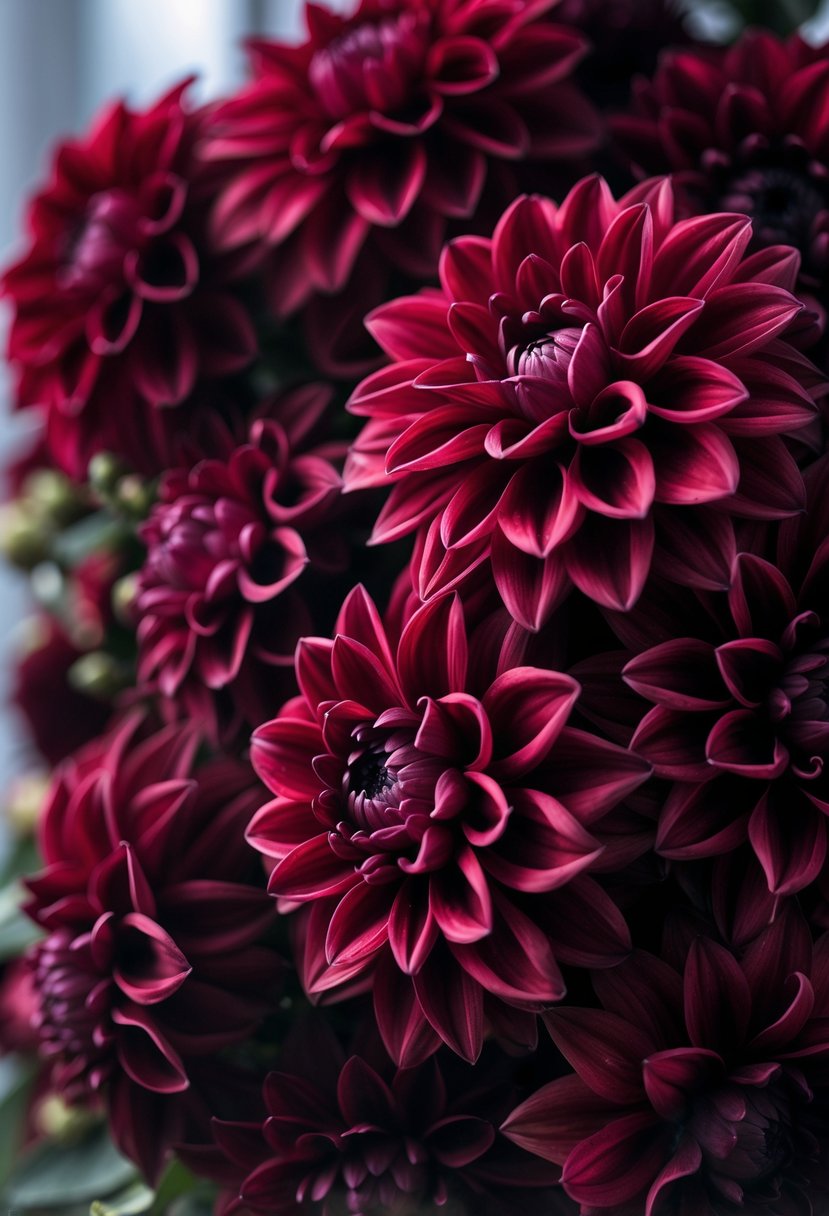
Deep red dahlias just bring it—rich color and bold shape, hands down.
Their layered petals add texture and pair well with dark roses or moody greenery.
I use them to create a dramatic, elegant focal point without feeling overwrought.
5. Plum-Colored Peonies
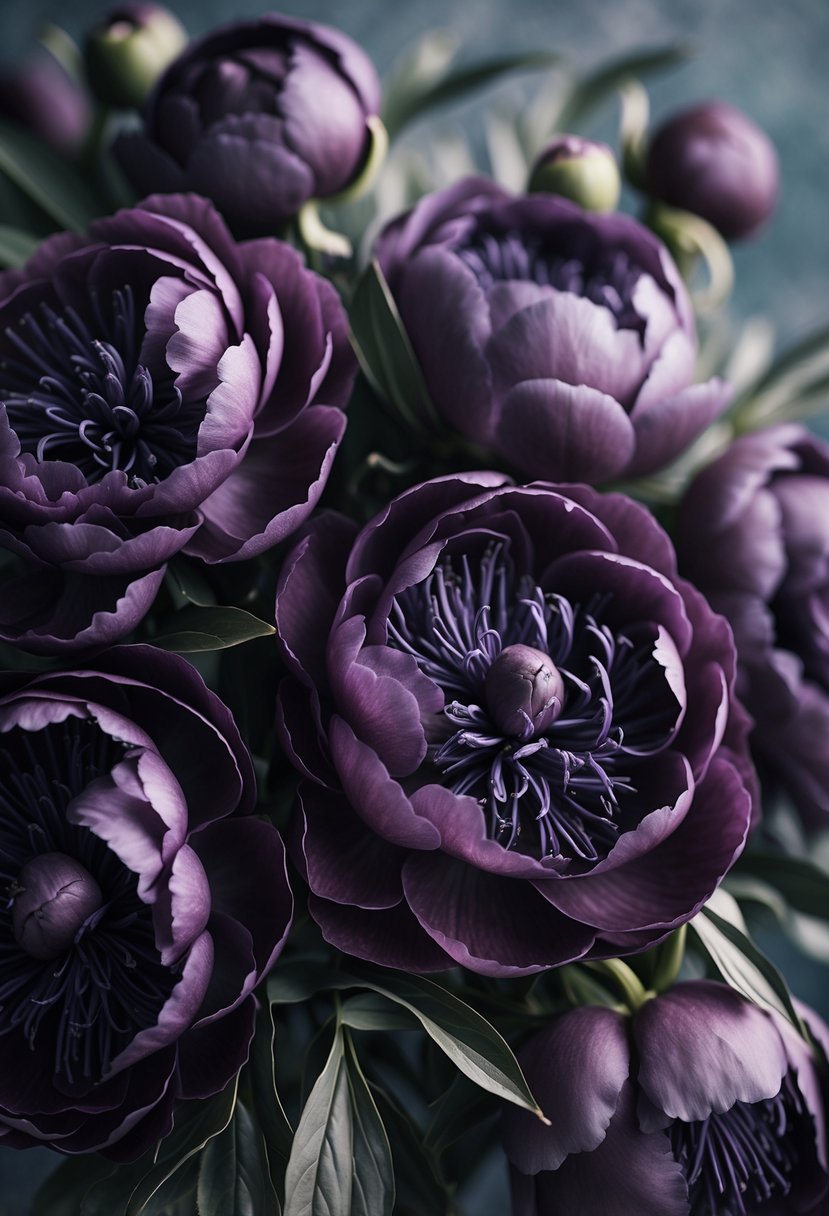
I choose plum peonies for depth and softness in bouquets.
Their rich tones pair well with blush, gold, or deep greenery.
I recommend using a few blooms for impact rather than overcrowding the arrangement.
6. Moody Ranunculus
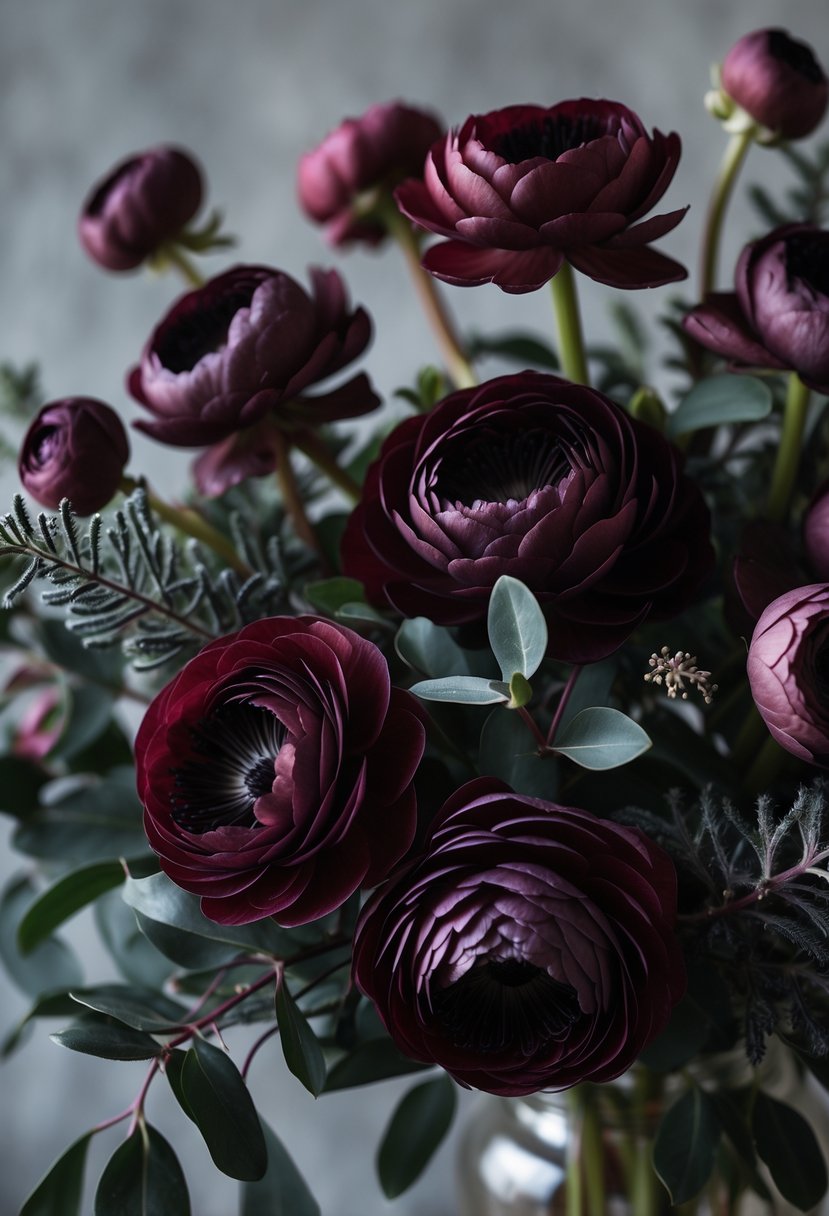
Ranunculus just works for moody bouquets—their layered petals give that rich texture.
I pair deep burgundy, plum, and coffee-toned blooms with dark greenery for a dramatic look.
Mixing in a few white or blush flowers helps keep the bouquet readable.
7. Burgundy Dahlias
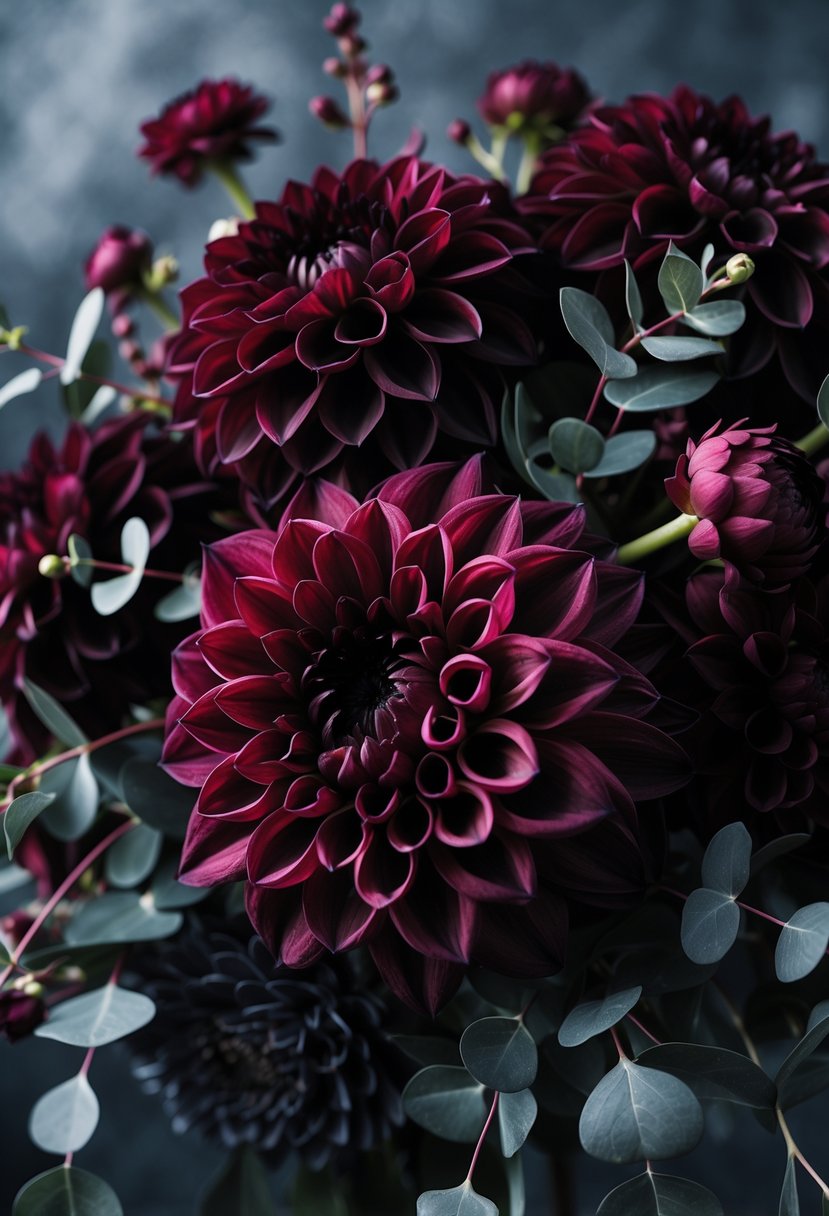
Burgundy dahlias add depth and that lush color you’re after.
Their layered petals give texture and pair well with dark foliage or black calla lilies.
I often use them as focal blooms for dramatic, elegant arrangements.
8. Cappuccino Roses
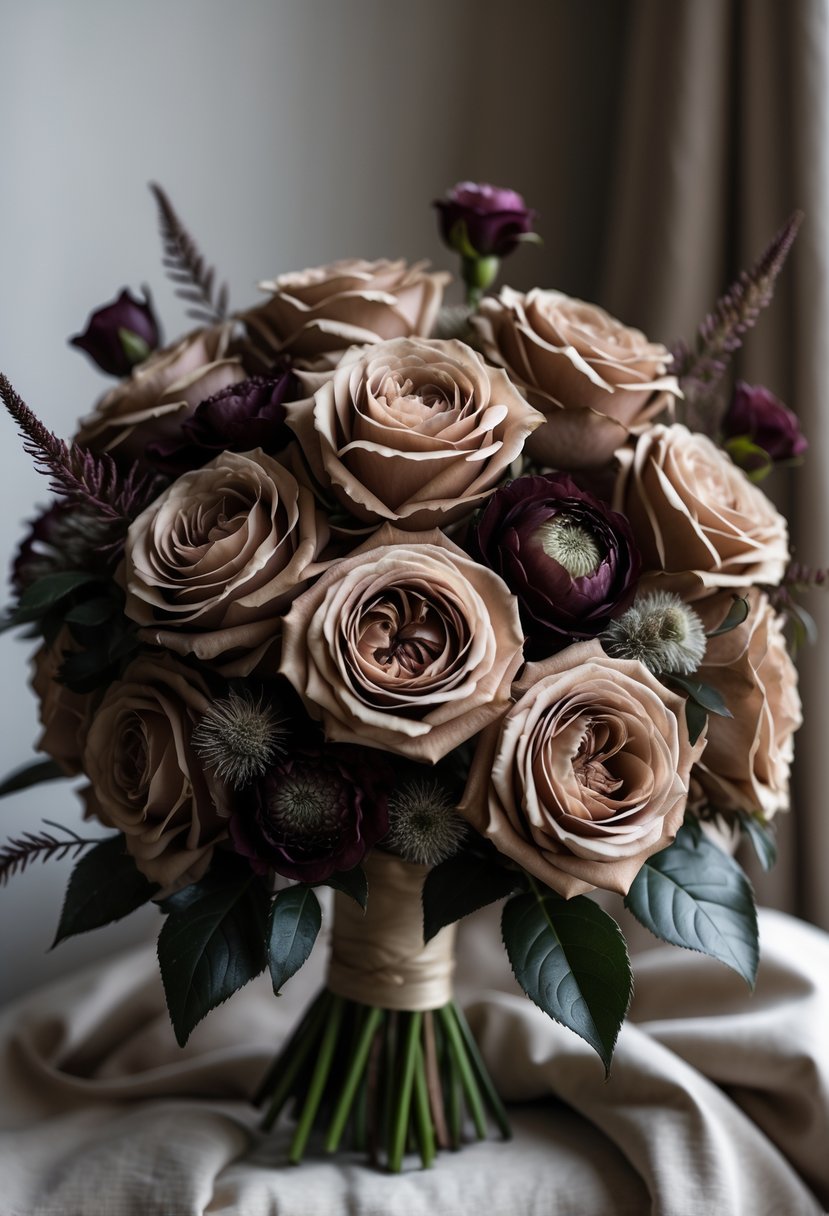
Cappuccino roses have this warm tan and mocha tone that adds depth without being too much.
I pair them with deep burgundy blooms and dark greenery to create contrast and a soft, modern look.
9. Autumn Eucalyptus
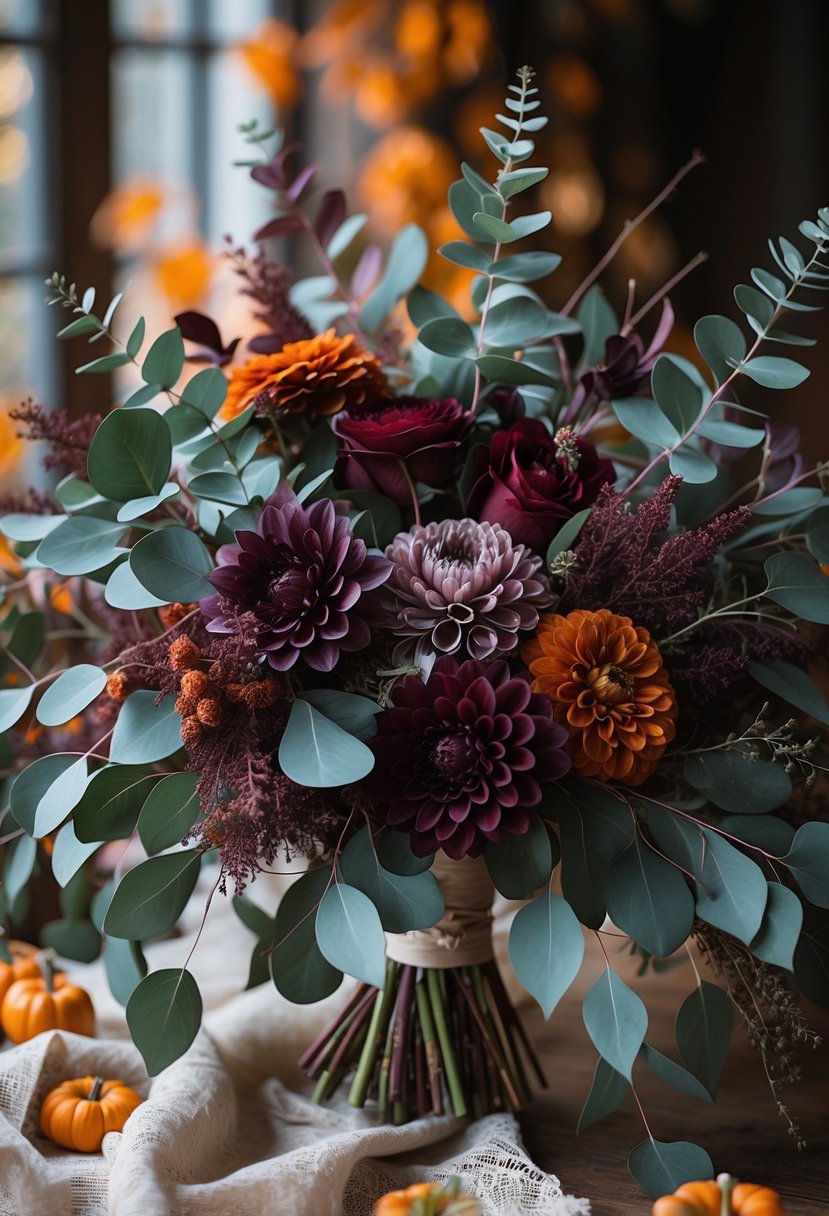
I pair silvery eucalyptus with deep burgundy blooms for a rich fall look.
Its rounded leaves add texture and a cool contrast to warm-toned flowers.
Using longer stems lets eucalyptus trail and soften the bouquet edges.
10. Black Berries
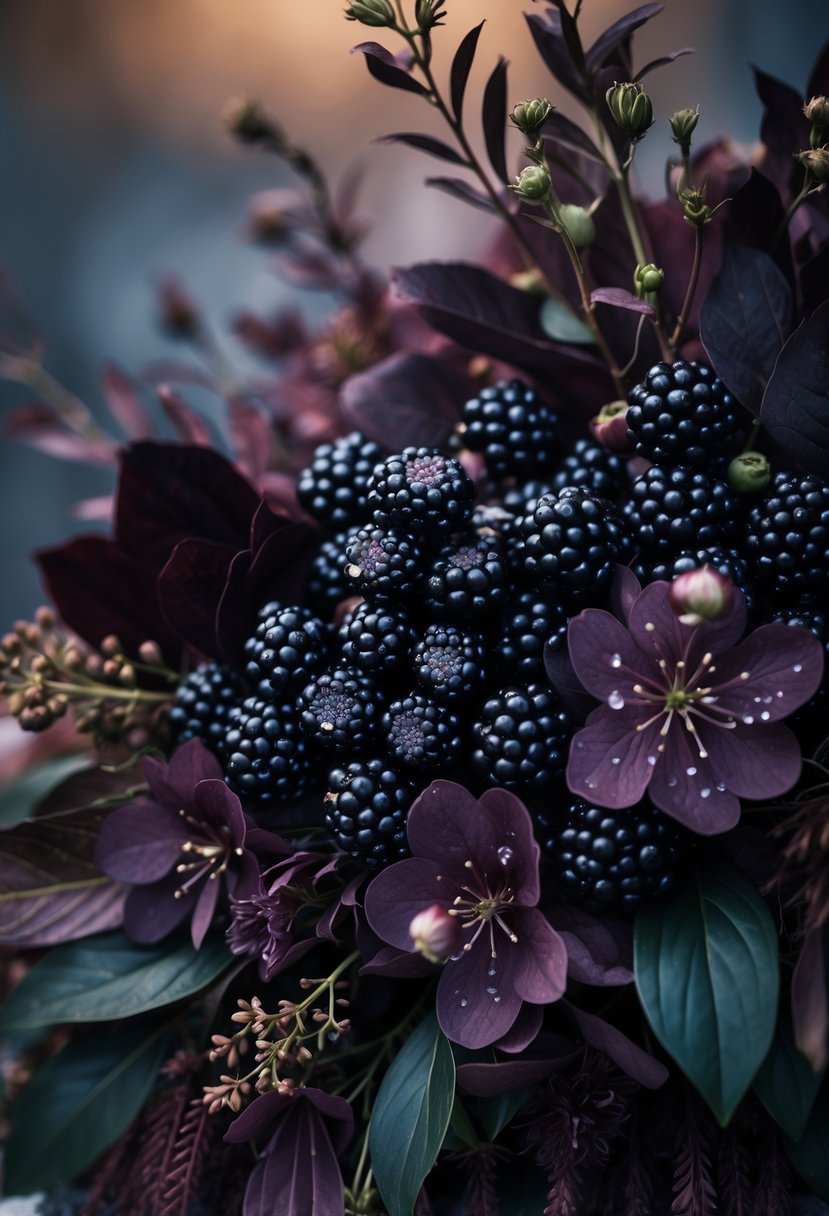
I like adding black berries for texture and a moody touch.
They pair well with dark roses and deep foliage.
Use them sparingly to keep arrangements elegant and not heavy.
11. Spiky Thistle Heads
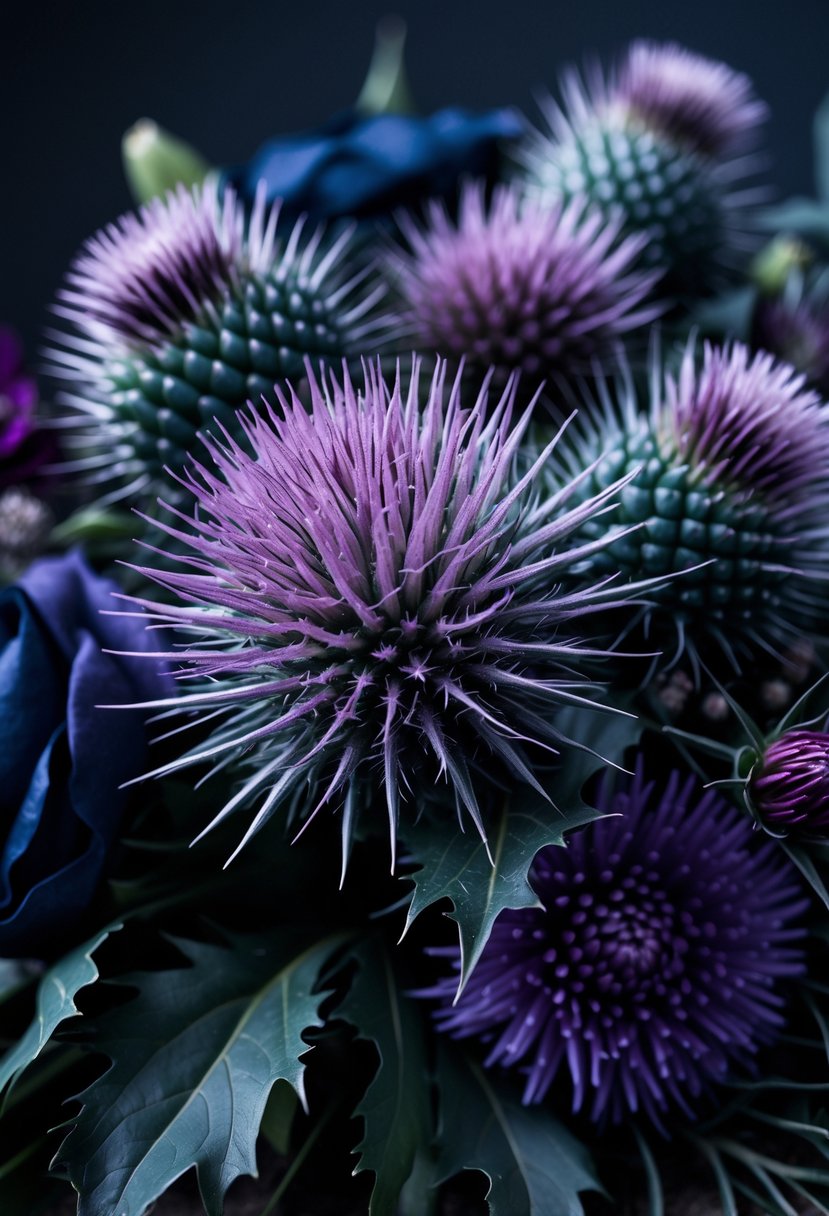
I use thistle for texture and contrast in moody bouquets.
Its sharp form pairs well with deep roses and dark foliage.
Thistle adds a rugged, modern edge without overwhelming other blooms.
12. Dried Lotus Pods
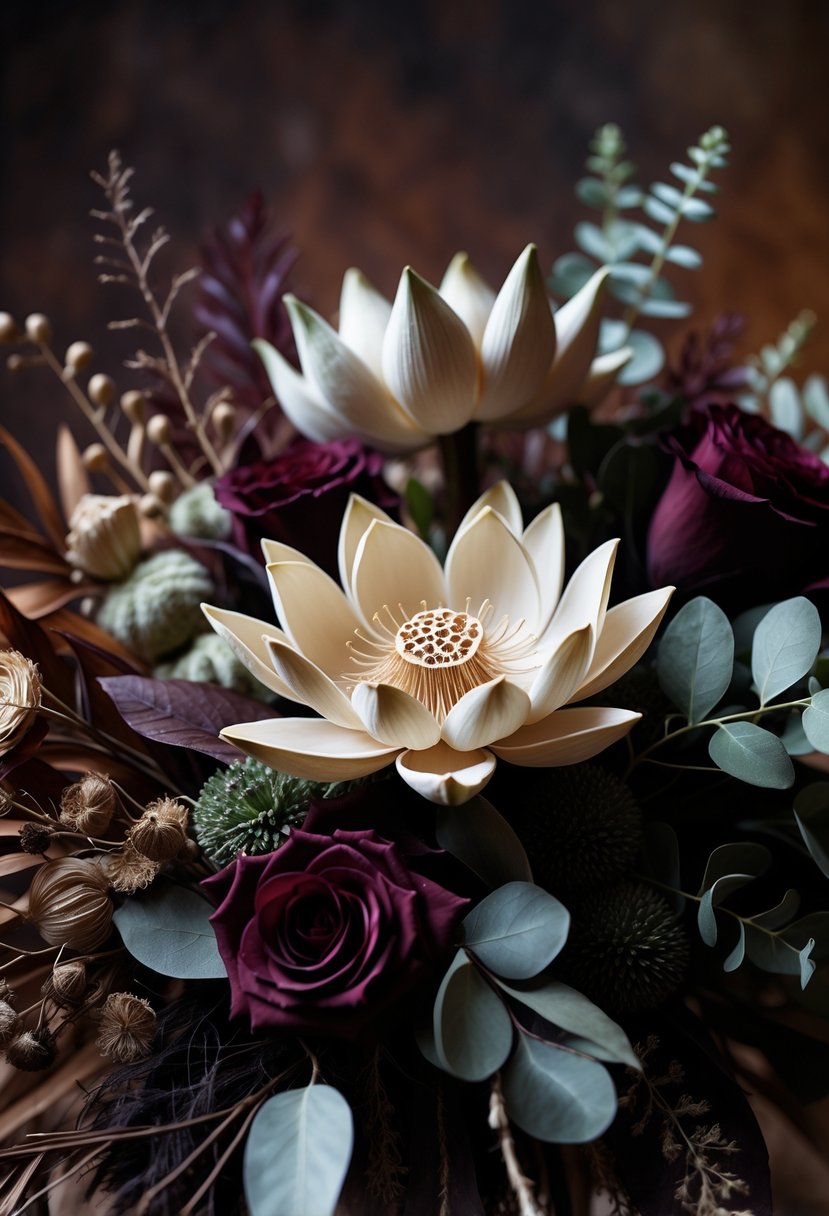
I use dried lotus pods for texture and a moody, sculptural look.
They pair well with deep blooms and muted foliage.
They last long and add an unexpected, natural edge to bouquets.
13. Metallic-Painted Succulents
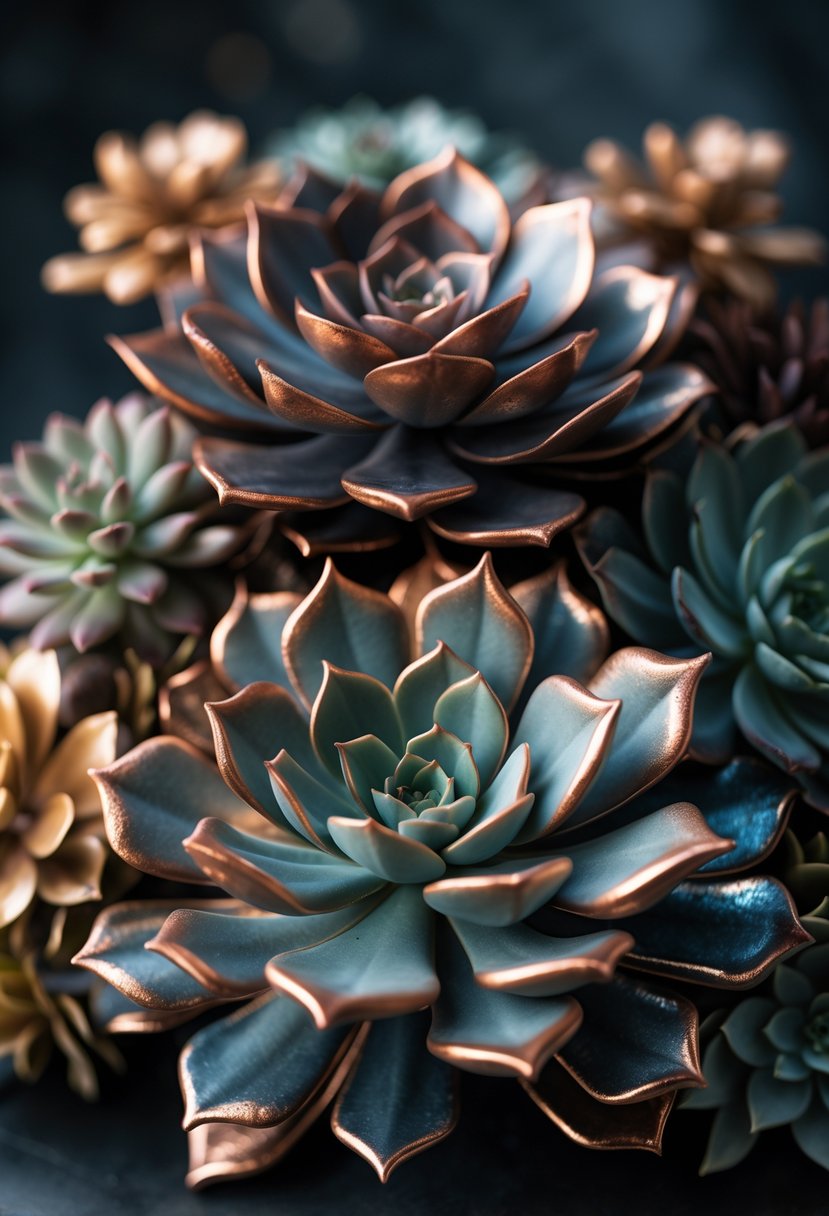
Metallic-painted succulents bring shine and texture to moody bouquets.
They pair well with deep florals like burgundy roses and dark calla lilies.
I’d go for gold or gunmetal paint for a bit of glamour without taking over the whole arrangement.
14. Hellebores
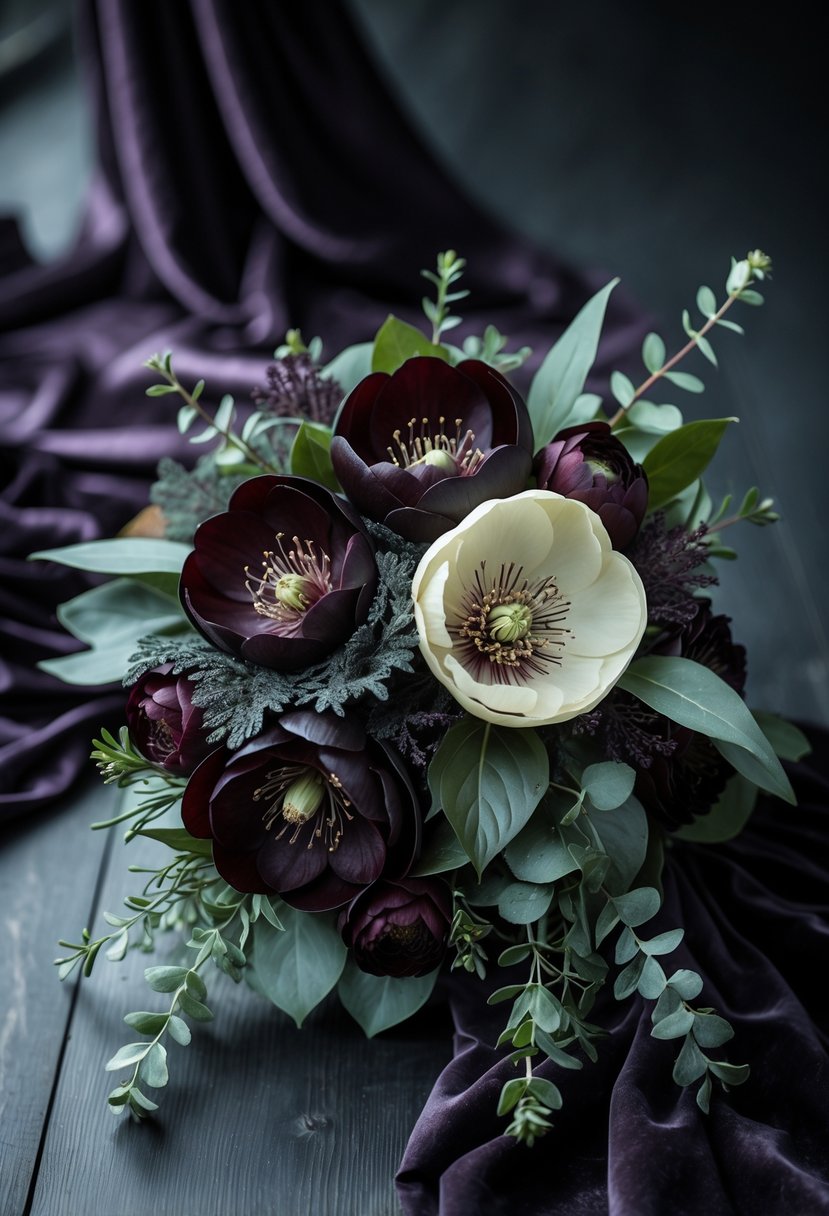
Hellebores just work for moody bouquets—their muted, dusky petals add quiet drama.
They pair well with deep ranunculus and dark foliage to build texture without brightening the palette.
15. Fritillaria
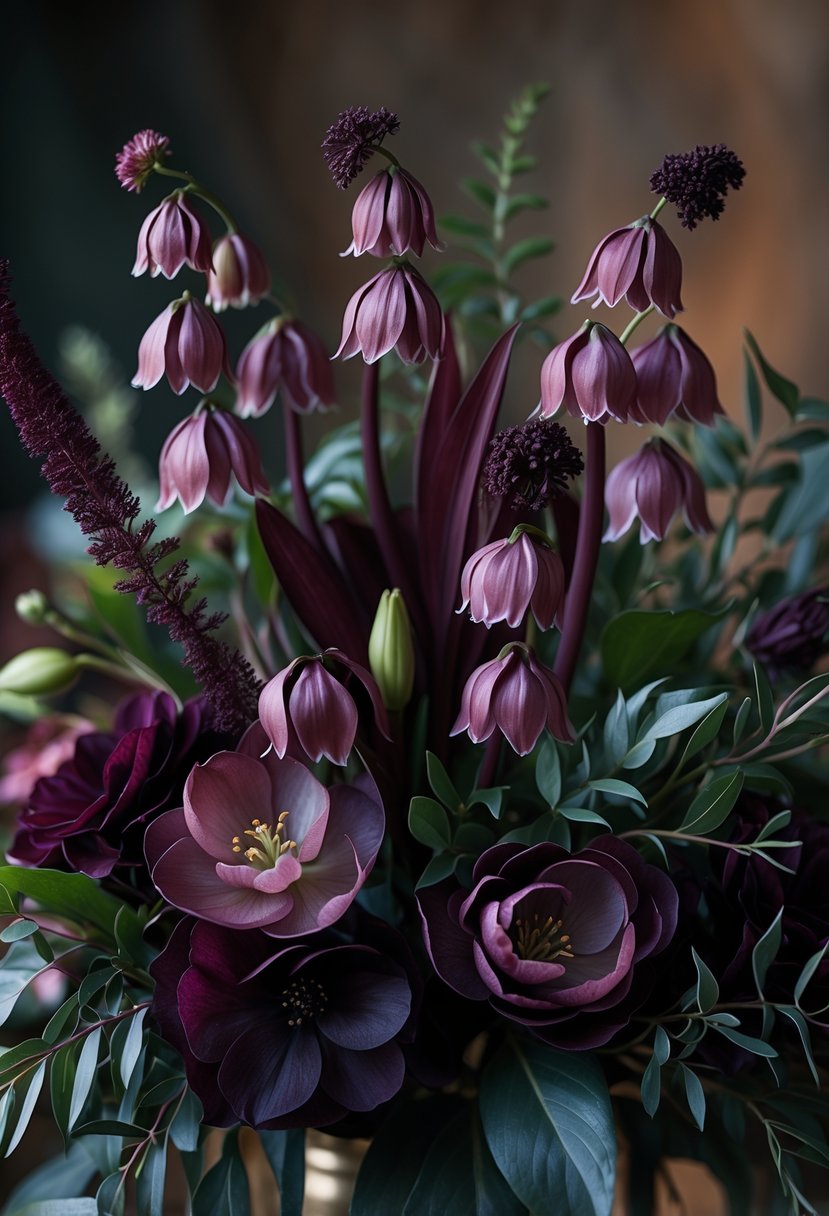
I’ve always had a soft spot for fritillaria in moody bouquets—their checkerboard petals really do add a lush, textured look.
Deep purples and burgundy shades mix beautifully with velvet roses and dark, leafy greens.
They slip in an unexpected, elegant edge that doesn’t take over the whole arrangement.