





Table of Contents Show
Pirate crafts offer kids an exciting way to dive into imaginative play while developing their creativity and fine motor skills. These hands-on activities transform simple materials like paper plates, cardboard tubes, and construction paper into exciting pirate adventures that capture children’s attention for hours.
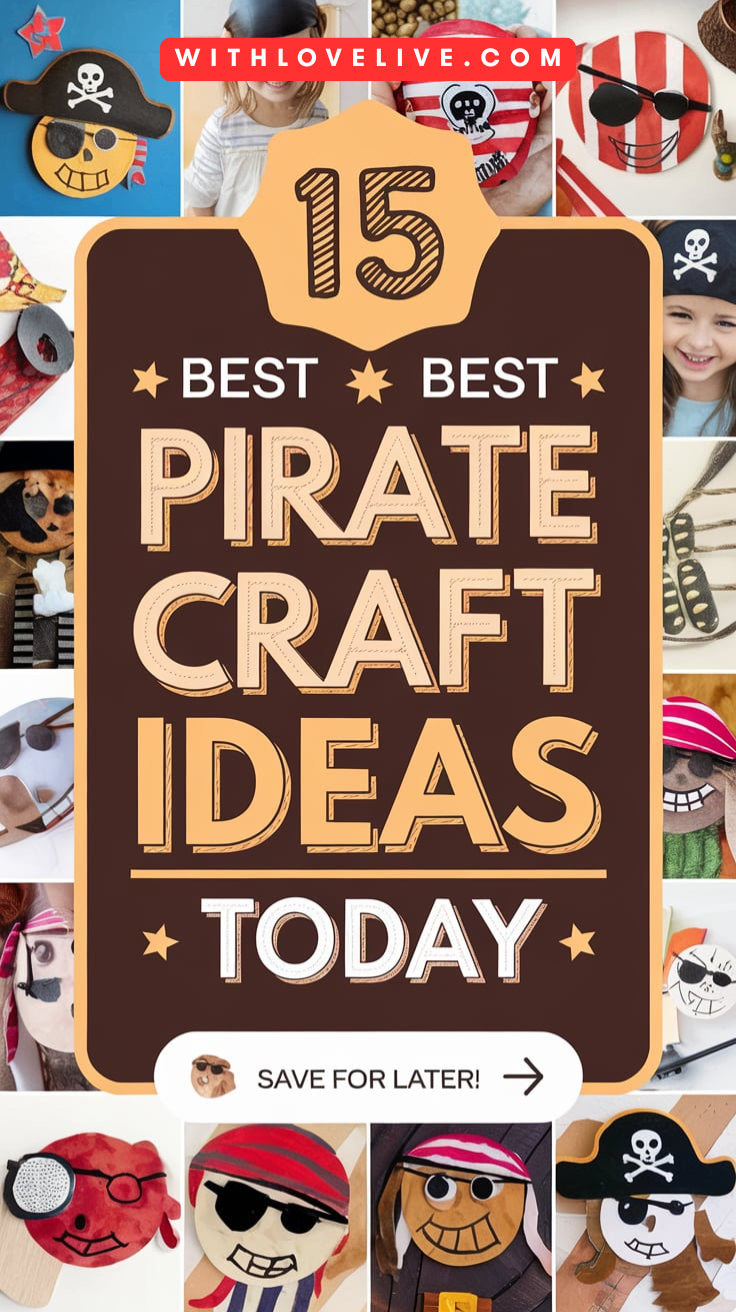
I’ve gathered 15 easy pirate craft projects that use common household supplies and require minimal preparation time, making them perfect for busy parents and teachers. From creating authentic-looking treasure chests to designing colorful pirate flags, these crafts cover everything needed for a complete pirate experience. Each project includes simple steps that kids can follow independently or with light adult supervision, ensuring successful results that boost confidence and encourage further creative exploration.
1. Paper Plate Pirate Ship
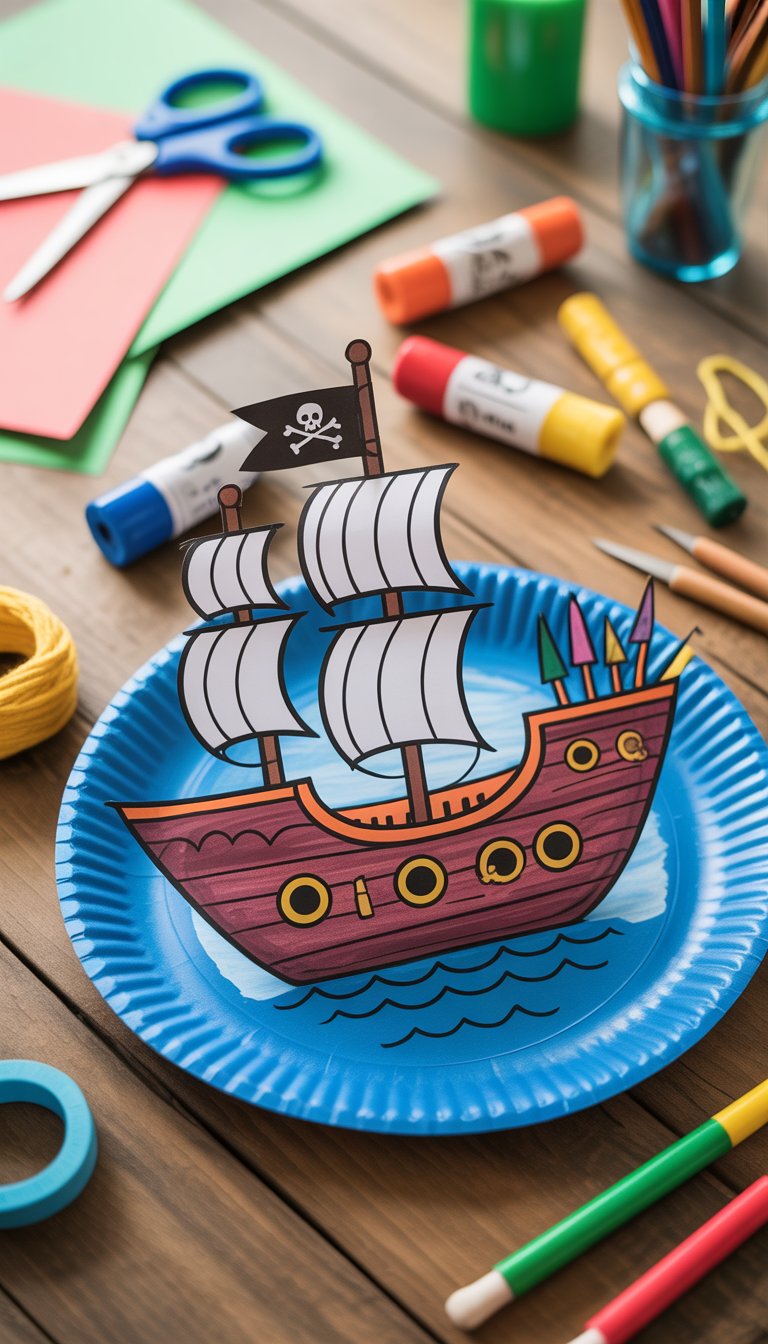
Paper plate pirate ships are one of my favorite crafts for kids. They’re simple to make and let children use their imagination.
You need two paper plates, construction paper, a craft stick, and glue. Cut one plate in half for the sail.
Staple the half plate to the whole plate to create the ship’s body. Add the craft stick as a mast and glue paper sails on top.

For People Who Love to Make Things ✂️
Kids can paint their ships or add paper flags. This craft works well for pirate-themed parties or summer activities.
The 3D design makes these ships fun to play with after crafting. Children love creating their own fleet of pirate vessels.
2. Pirate Eye Patch Craft
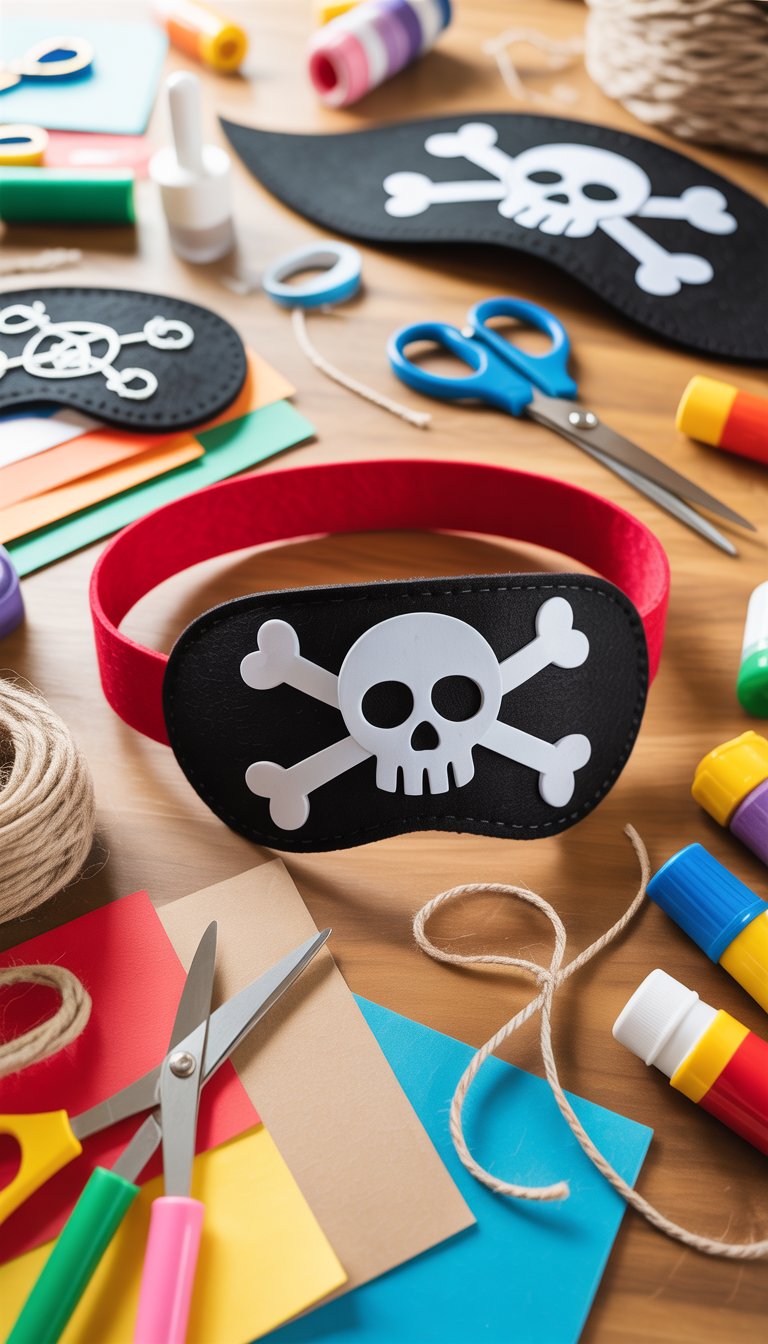
I love making pirate eye patches because they’re so easy and fun. Kids can wear them right away for pretend play.
You need black felt, elastic string, and scissors. Cut an oval shape from the felt.
Poke small holes on each side of the patch. Thread the elastic through both holes and tie knots to secure it.
The eye patch should fit comfortably around your child’s head. You can also use black construction paper instead of felt.
Let kids decorate their patches with stickers or markers. Some children like adding skull and crossbones designs.
This craft works perfectly for pirate birthday parties. I always make extras because kids love trading different designs with friends.
3. Treasure Chest Box
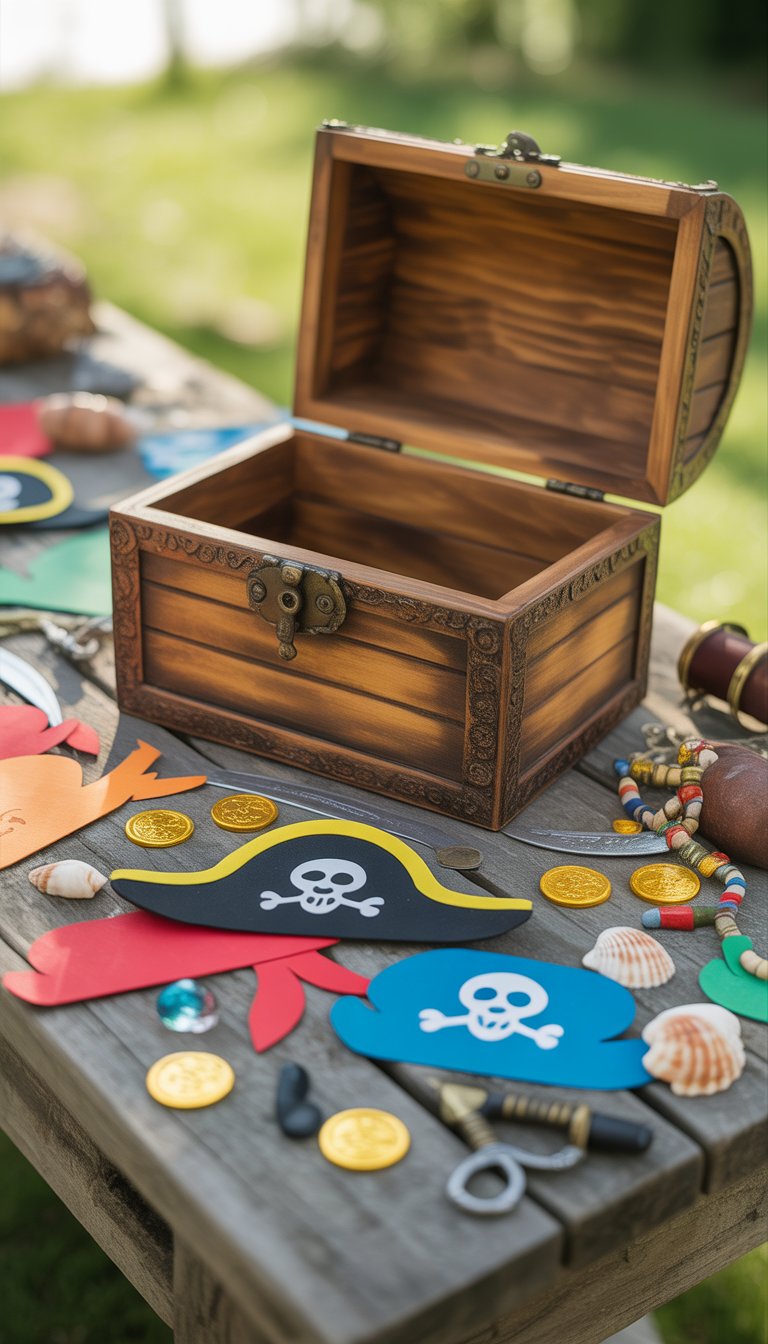
Making a treasure chest box is one of my favorite pirate crafts for kids. It’s simple and gives children something special to store their treasures.
You need a cardboard box, brown paint, and craft supplies. Paint the box brown and let it dry completely.
Add details like metal corners using gray paper or foil. Draw lines on the box to make it look like wooden planks.
Create a curved lid by cutting the top flap. Attach it with tape so it opens and closes like a real chest.
Kids can fill their treasure chest with coins, jewels, or small toys. This craft helps develop fine motor skills while creating hours of imaginative play.
The finished chest works great for pirate parties or everyday play. Children love having their own special place to hide treasures.
4. Pirate Hat from Construction Paper
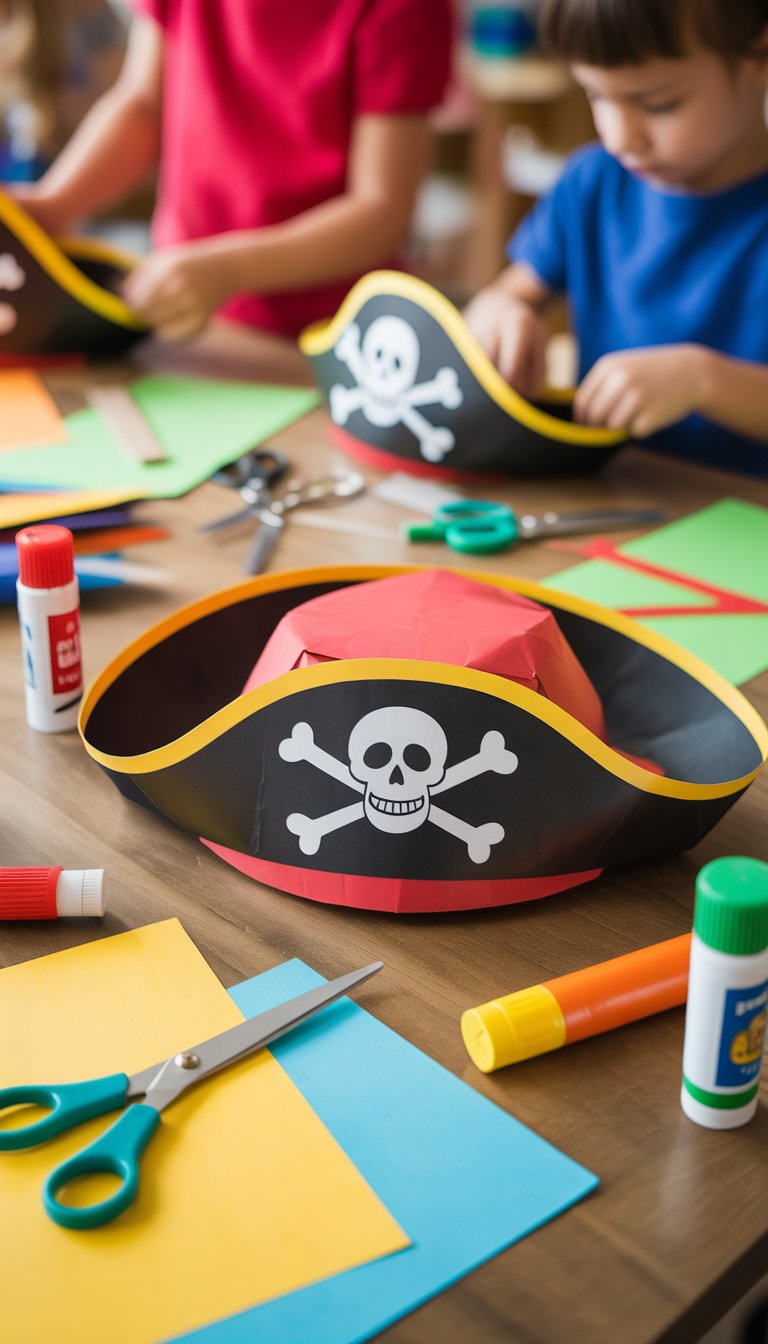
I recommend using black construction paper for this classic pirate hat. You’ll need two sheets of black paper, scissors, and a stapler.
Cut one sheet into a large triangle shape. This becomes the main hat part.
Roll the second sheet into a cylinder for the hat base. Staple the edges together to hold the shape.
Attach the triangle to the cylinder base using staples. Make sure the triangle stands upright.
You can add colorful paper feathers or draw a skull and crossbones symbol. White paper works well for decorating the front.
This hat fits most kids’ heads. Adjust the cylinder size by making it bigger or smaller before stapling.
5. Paper Tube Pirate Telescope
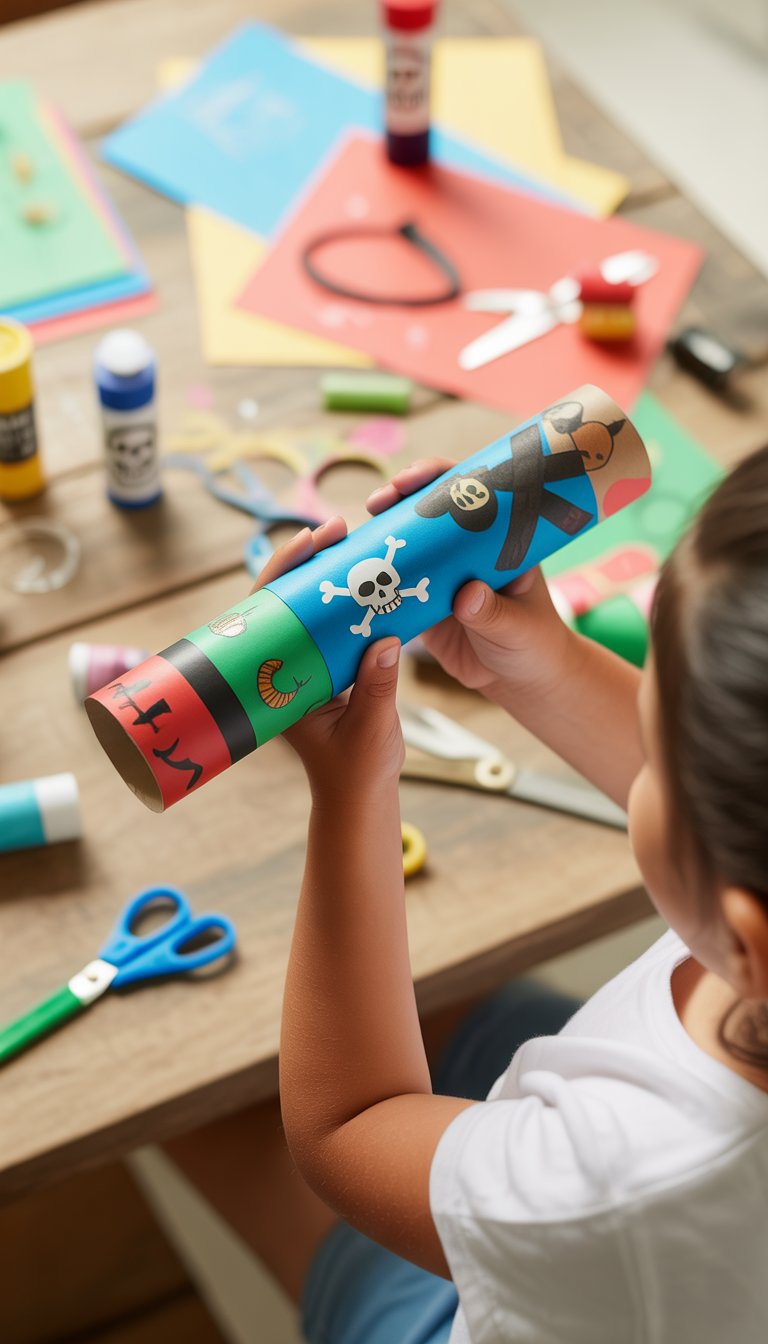
I love this simple craft that turns toilet paper rolls into pirate spyglasses. Kids can make their own telescope in just minutes.
Take three empty toilet paper tubes and tape them together end to end. This creates the perfect length for a pirate telescope.
Wrap the tubes in brown or black construction paper. Use glue or tape to secure the paper around the tubes.
Add rope or string around the telescope by wrapping it in sections. This gives it a real pirate look.
Kids can decorate their telescope with markers, stickers, or paint. Let them add their own pirate style to make it special.
The telescope works great for pirate pretend play. Children love using it to search for treasure or spot other pirates.
This craft uses recycled materials and takes about 30 minutes to complete. It’s perfect for kids ages 3 and up.
6. Printable Pirate Masks
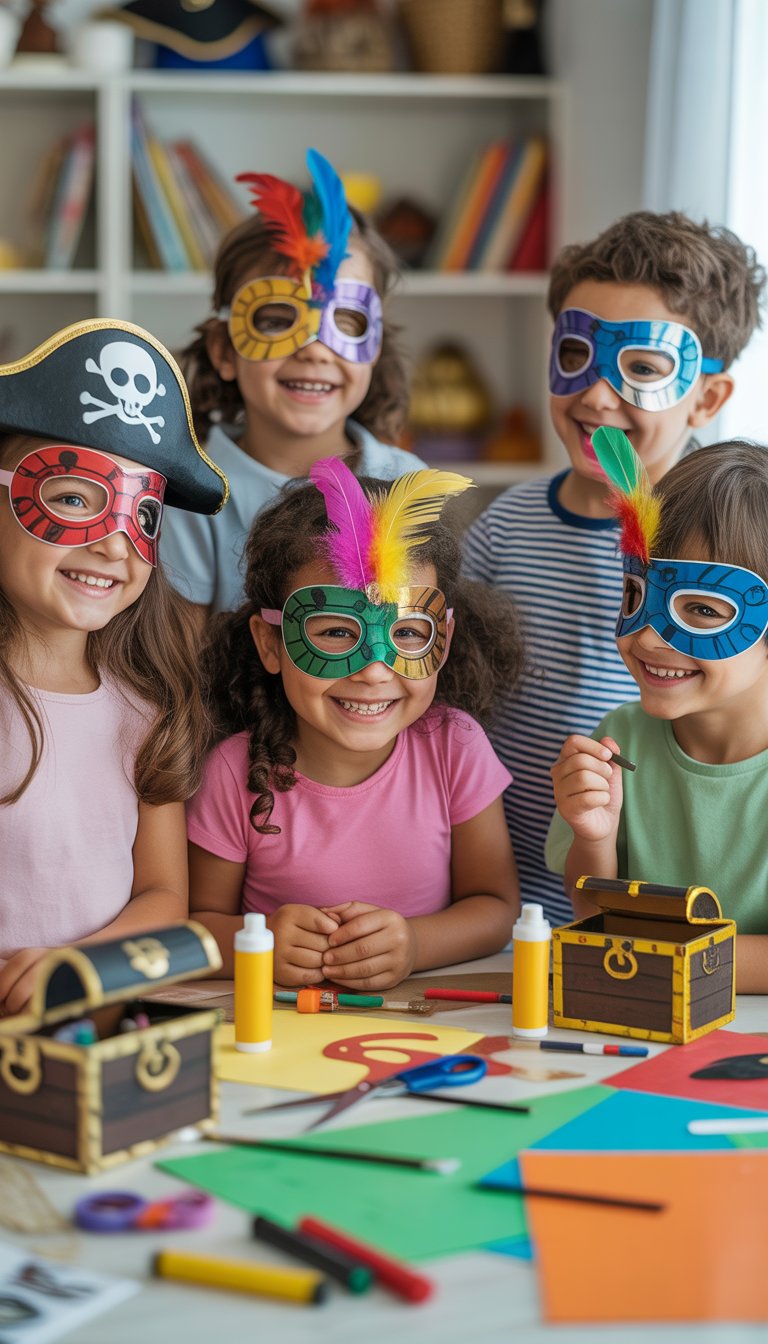
Printable pirate masks are my go-to craft for quick pirate fun. They need very few supplies and work great for parties.
I find free templates online with eye patches, bandanas, and pirate faces. Print them on cardstock for stronger masks.
Cut out the mask shapes carefully. Let kids decorate with crayons, markers, or stickers. Add string or elastic to wear them.
These masks work well for pretend play and dress-up games. Kids can make different pirate characters with various templates.
7. Handprint Pirate Parrot
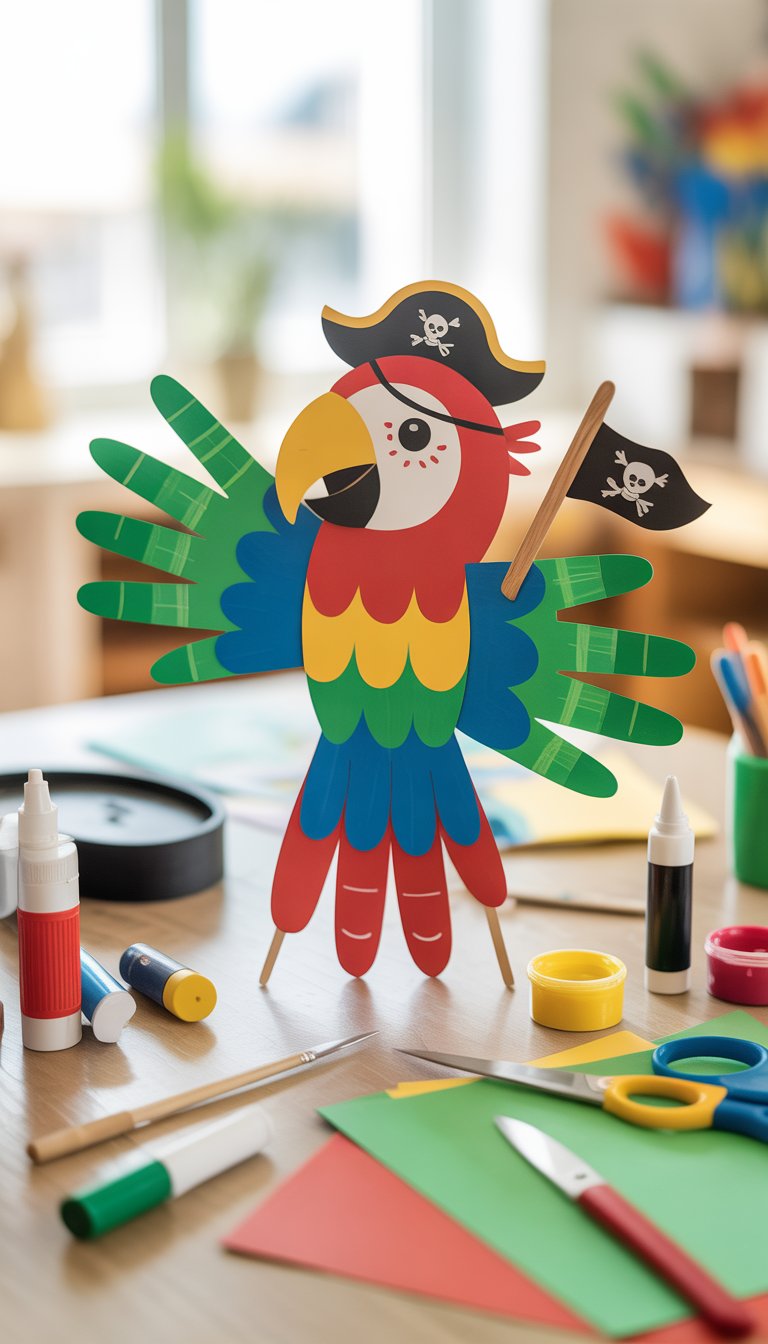
I love making handprint crafts with kids because they create lasting memories. This pirate parrot uses your child’s handprint as the parrot’s colorful feathers.
Start with green or red paint on your child’s hand. Press it firmly onto white paper to make a clear print.
Let the handprint dry completely. Then add a parrot head at the thumb area using orange paint or markers.
Draw a curved beak and small round eye. Add details like wing patterns and tail feathers with crayons or markers.
8. Cardboard Pirate Ship
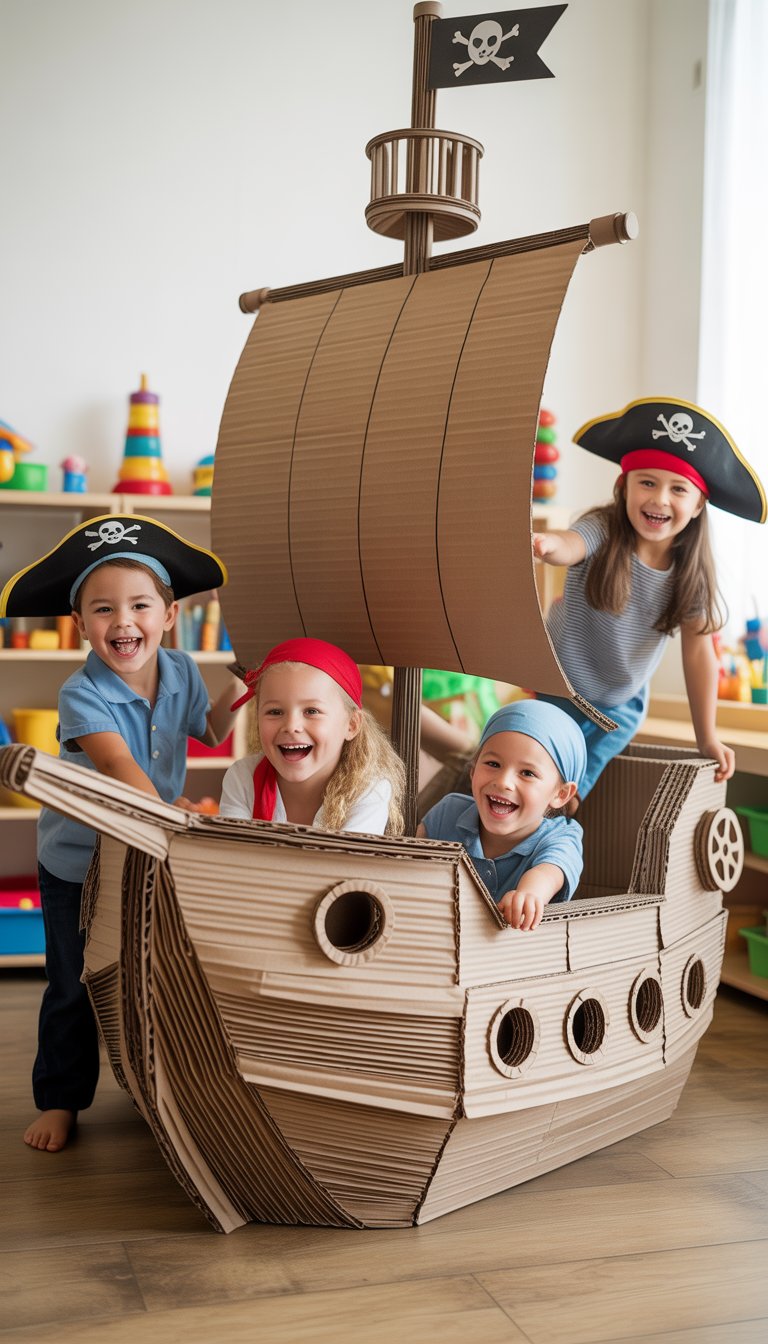
I love making cardboard pirate ships because they use materials you already have at home. This craft creates a toy kids can actually play with after making it.
Start with a large cardboard box for the ship’s base. Cut one side lower to make the deck area.
Add a toilet paper tube as the mast. Tape a paper sail to the tube using white or tan paper.
Paint the ship brown or black. Let kids add pirate flags and decorations with markers or stickers.
9. Pirate Flag with Fabric Paint
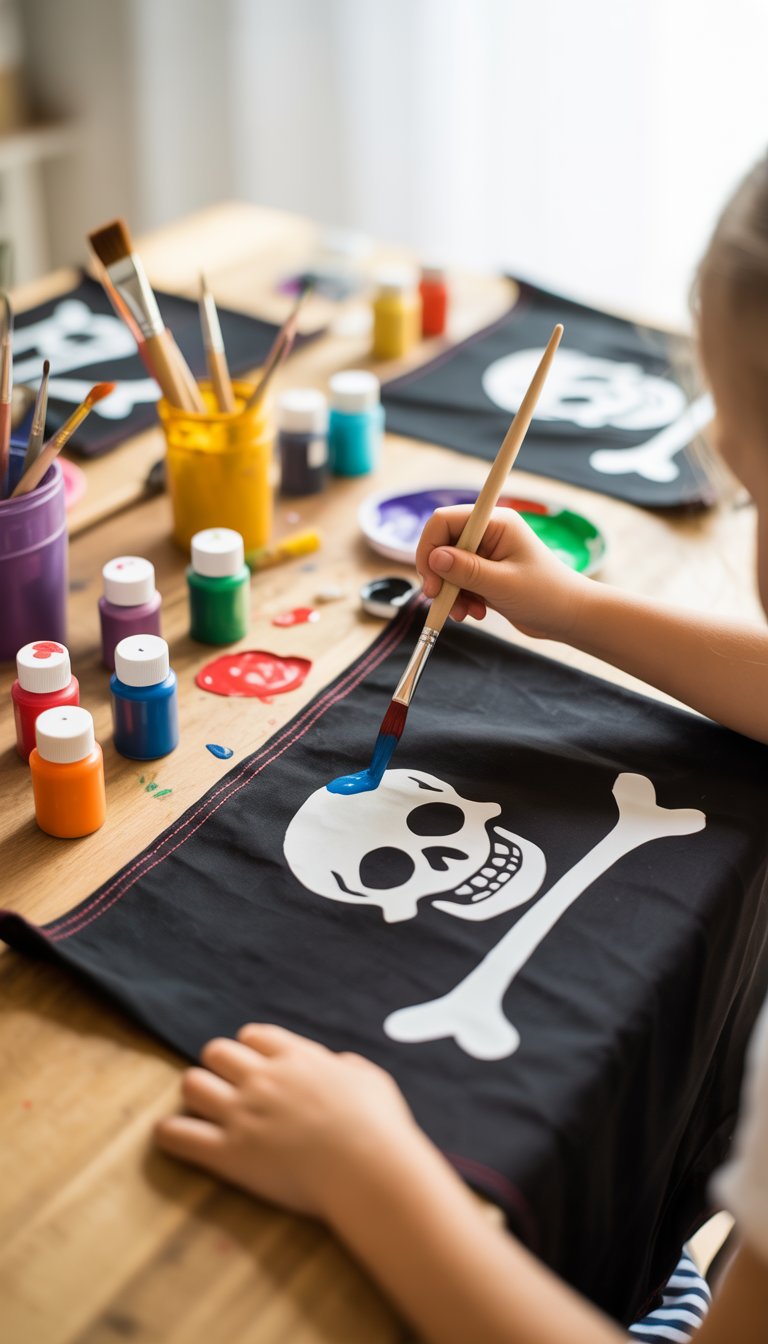
I love making pirate flags with fabric paint because they last longer than paper versions. This craft creates a sturdy flag that kids can wave around during play.
You’ll need a white cotton fabric square, black fabric paint, and a paintbrush. Cut the fabric into a rectangle about 12 inches wide.
Paint a skull and crossbones design in the center. Let kids add their own pirate symbols like swords or treasure chests around the edges.
The fabric paint takes about 2 hours to dry completely. Once dry, attach the flag to a wooden dowel or stick with glue or staples.
10. Pirate Hook Craft Using Foil
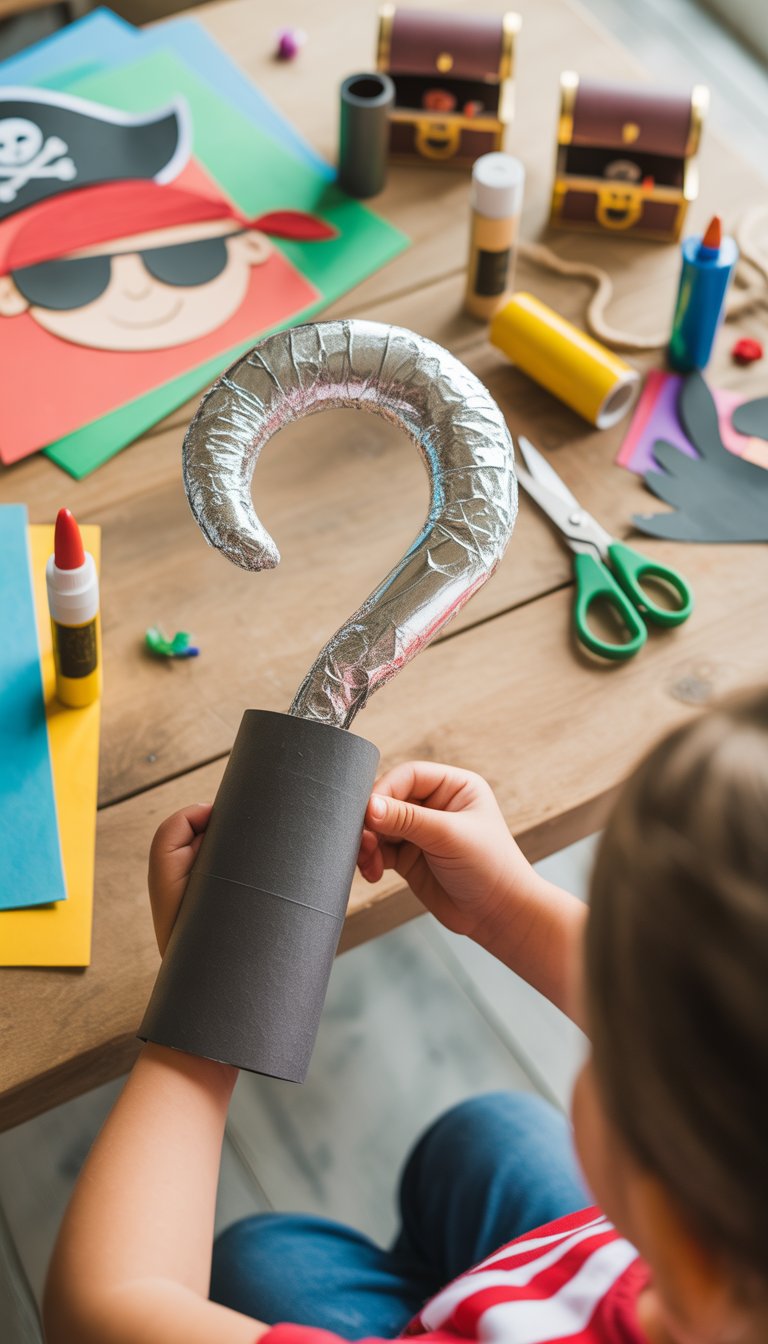
I love how simple this pirate hook craft is to make. You only need a paper cup, aluminum foil, and black tape.
First, I wrap the entire paper cup with aluminum foil. This creates the shiny metal look that pirates are known for.
Next, I shape a hook from cardboard and cover it with foil too. The hook should be about 4 inches long and curved at the end.
I tape the hook securely to the bottom of the cup. Black electrical tape works best for a strong hold.
Finally, I cut a small hole in the side of the cup for my child’s hand to fit through. This makes wearing the hook comfortable and easy.
11. Pirate Map with Tea-Stained Paper
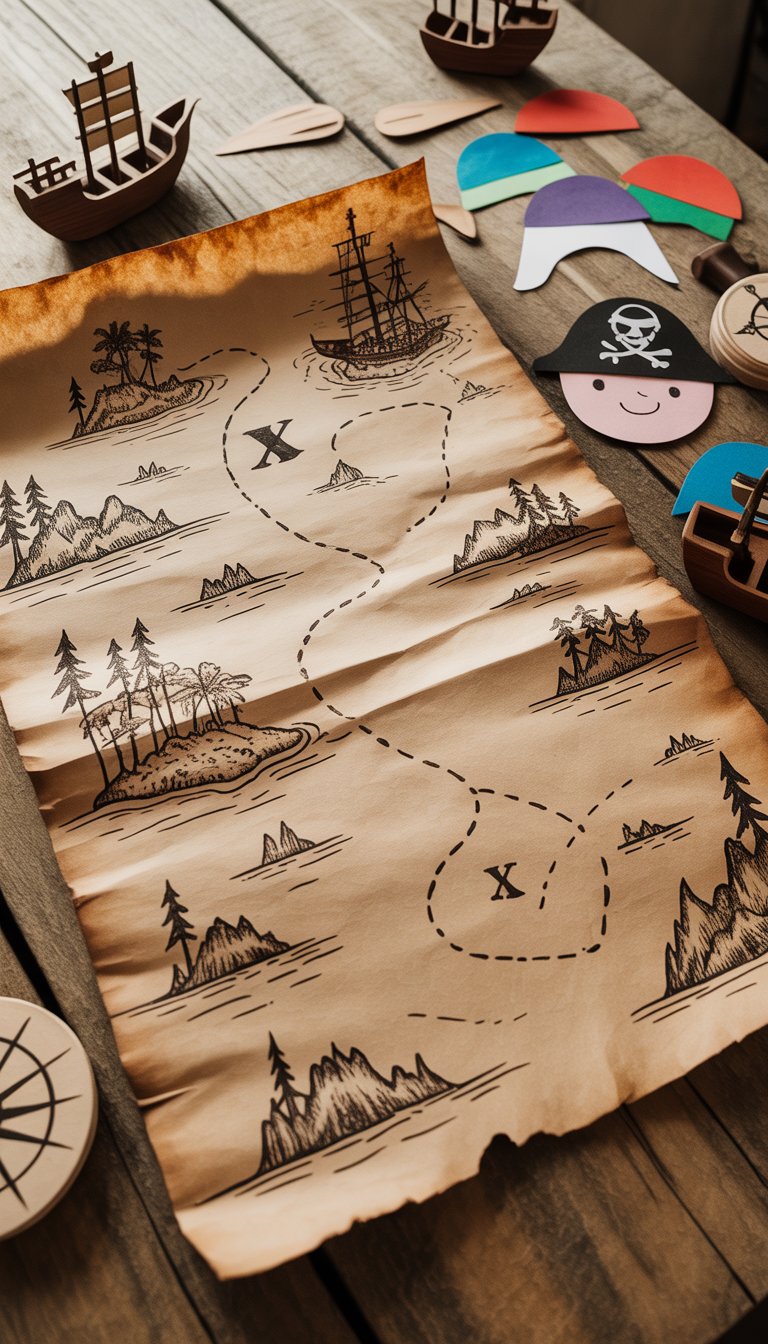
I love making pirate maps using tea staining because it gives paper an old, weathered look. This craft makes kids feel like real treasure hunters.
First, I brew strong tea or coffee in a bowl. The darker the liquid, the more aged the paper will look.
Next, I dip a sponge into the tea mixture. I gently dab it all over the paper surface. I avoid rubbing too hard to prevent tearing.
I let the paper dry completely. Then I draw my treasure map with landmarks like mountains, caves, and an X marking the treasure spot.
12. Pirate Sword from Cardboard
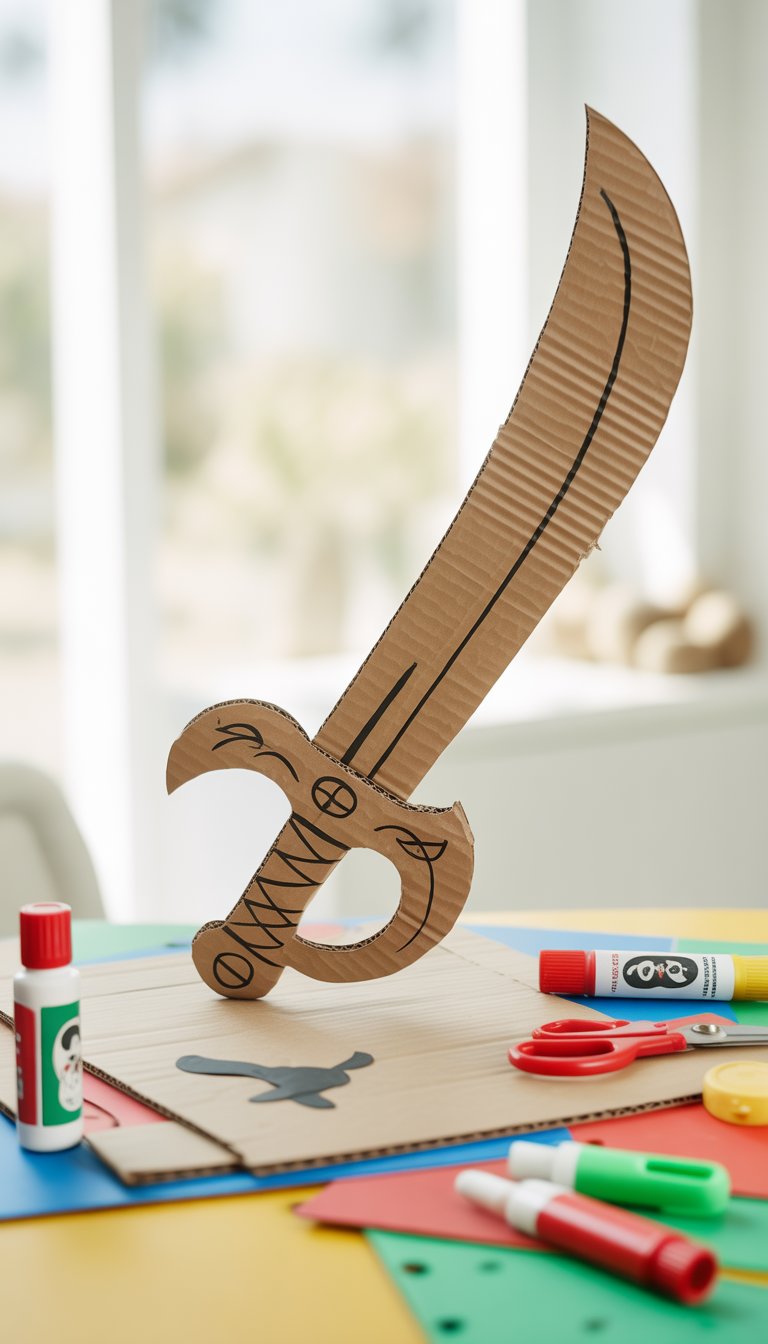
I love making pirate swords from cardboard because they’re safe and simple. Kids can use them for pretend play without any worry.
Draw a sword shape on cardboard and cut it out. Paint it silver or wrap it in aluminum foil for a shiny look.
The handle needs extra grip. I wrap it with tape or fabric strips to make it comfortable to hold.
This craft uses materials from around the house. Old boxes work perfectly for the sword base.
13. Pirate Ship Collage
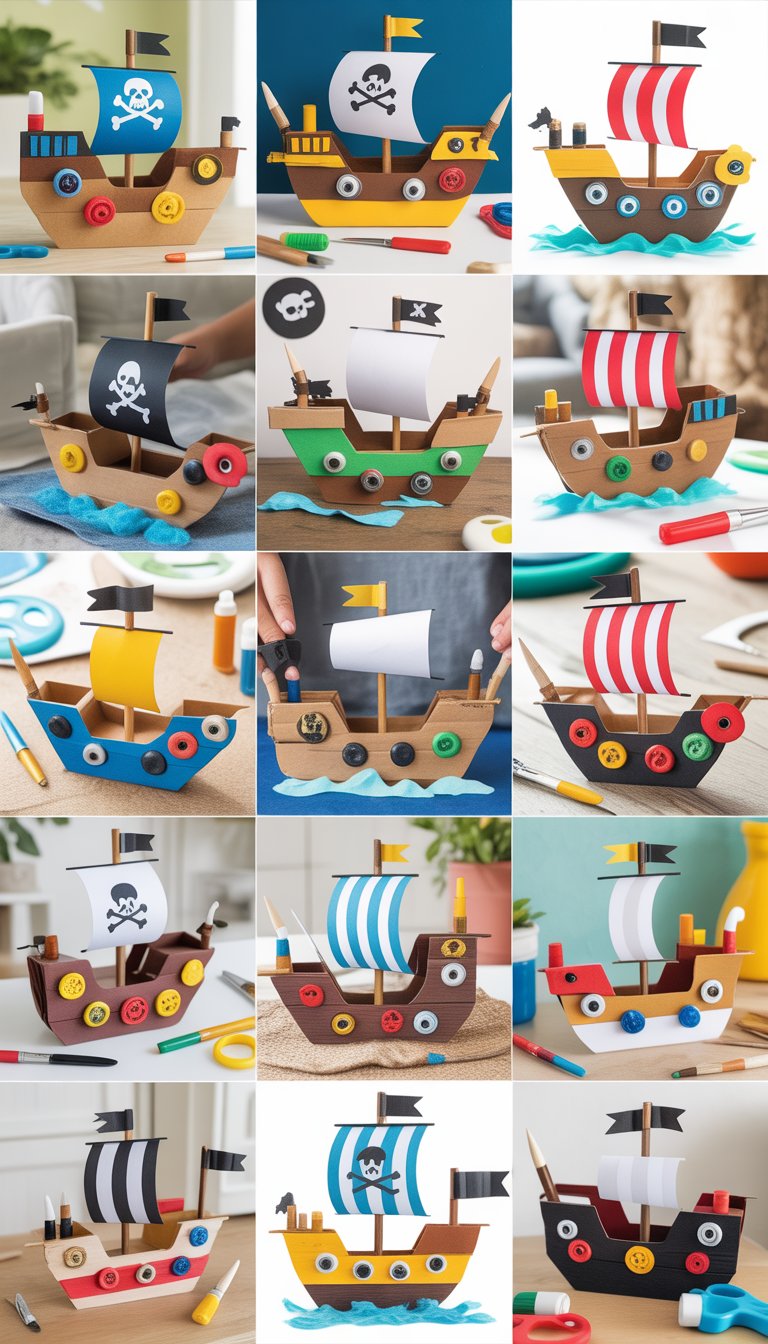
I love this creative craft because it’s perfect for preschoolers and older kids. You can make it with simple materials you already have at home.
Start with construction paper as your base. Cut out a large triangle for the sail and a boat shape for the hull.
Glue the pieces together on your paper. Add small details like a flag, mast, and waves using colored paper scraps.
This craft works great for pirate birthday parties. Kids can make their own unique ships with different colors and decorations.
14. Pirate Puppet with Paper Bags
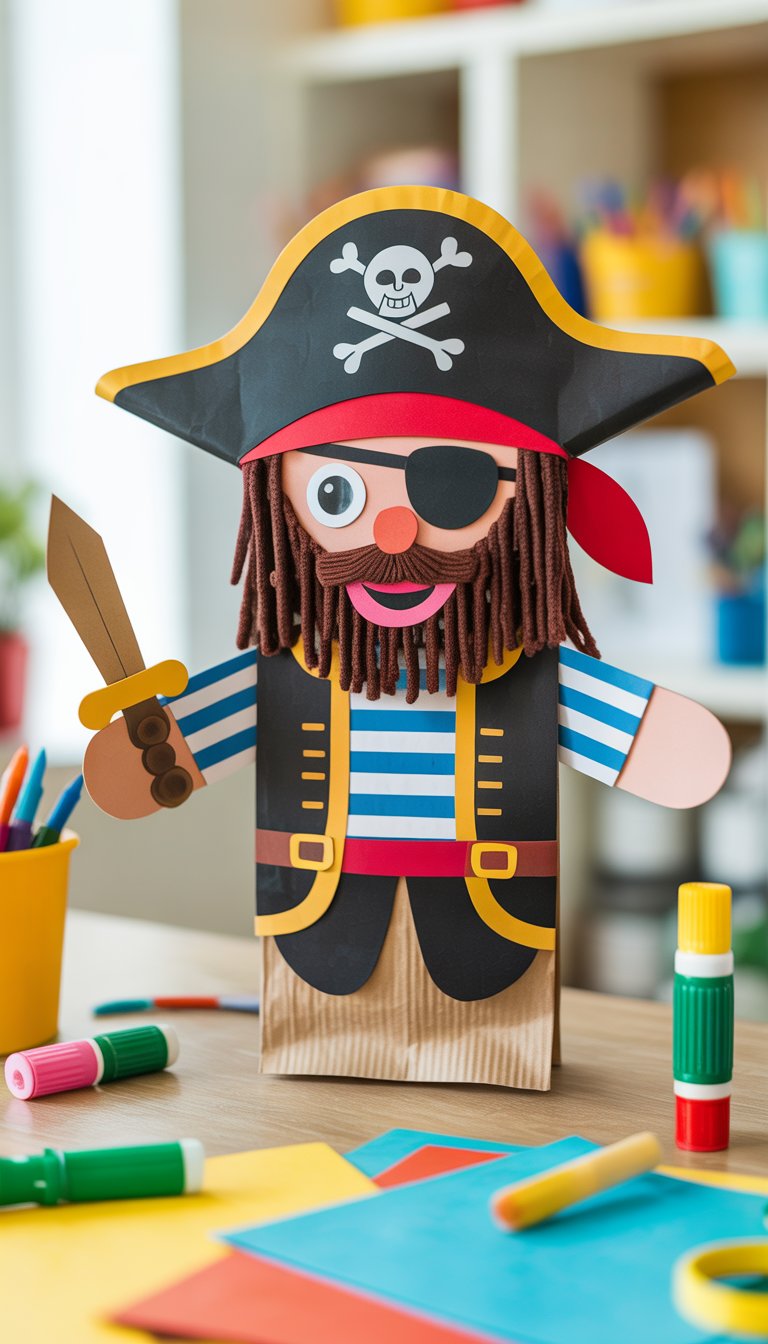
I love making pirate puppets with paper bags because they’re simple and fun. Kids can use brown lunch bags as the base for their pirate characters.
You’ll need a paper bag, markers, construction paper, and glue. Draw a pirate face on the bag flap. Cut out a hat, eye patch, and mustache from colored paper.
Glue the paper pieces onto your bag. Add googly eyes and draw a mouth. Your pirate puppet is ready for adventure stories and puppet shows.
15. Pirate Coin Craft with Aluminum Foil
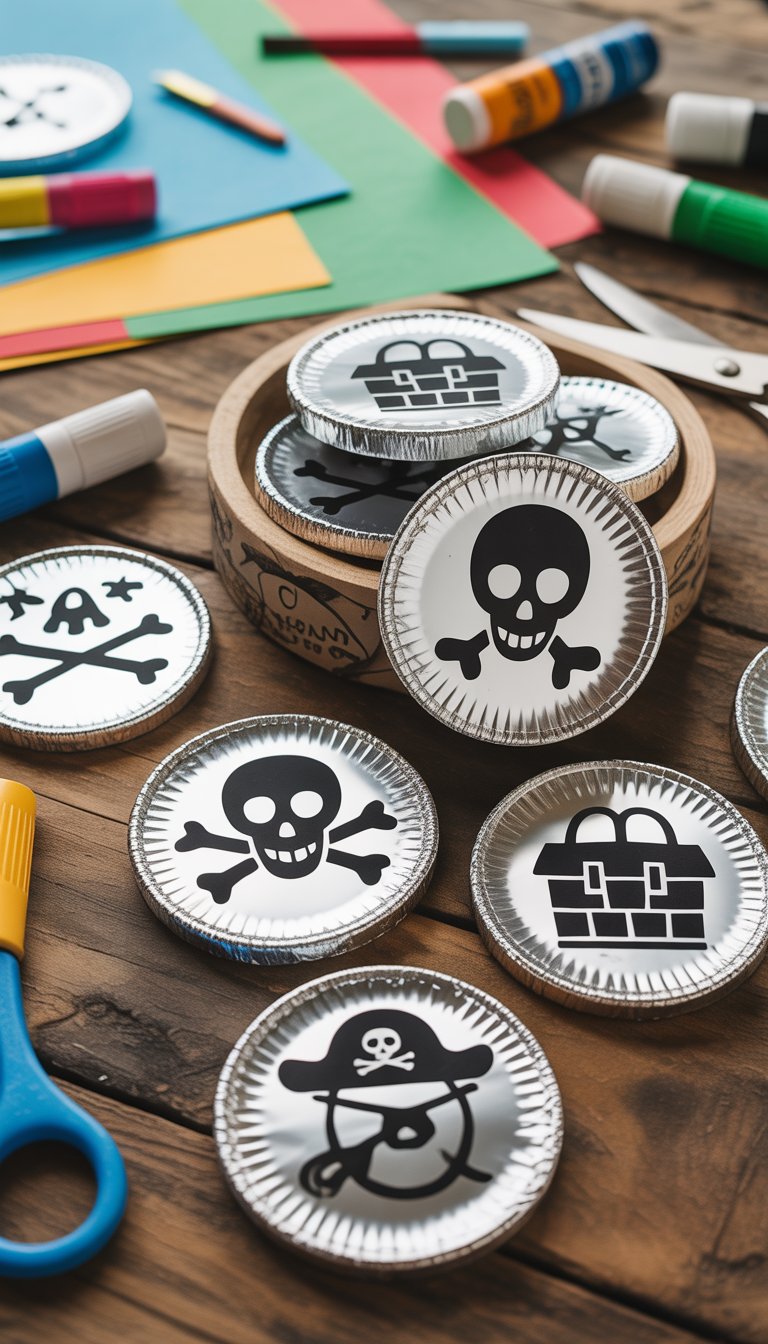
I love making pirate coins with aluminum foil because it’s so simple. You just need aluminum foil, cardboard circles, and glue.
Cut cardboard into coin shapes first. Wrap each piece tightly with aluminum foil. Press down hard to make it smooth.
You can draw pirate symbols on top with a dull pencil. The foil will show the design when you press into it.
These shiny coins look like real treasure. Kids can use them for pretend play or treasure hunts around the house.
Benefits of Pirate Crafts for Kids
Pirate crafts offer kids two main advantages that support their growth. These activities boost creative thinking while helping children develop better hand control and finger strength.
Encouraging Creativity and Imagination
Pirate crafts give kids the freedom to create their own adventure stories. When children make pirate hats, treasure maps, or ships, they start thinking about exciting journeys and hidden treasures.
These crafts help kids move beyond simple copying. They can choose their own colors for pirate flags or decide how to decorate their cardboard swords.
Key creative benefits include:
- Making up stories about their pirate characters
- Choosing unique designs and colors
- Problem-solving when crafts don’t go as planned
- Role-playing with finished projects
Kids often combine their finished crafts with imaginative play. A paper plate pirate mask becomes part of a treasure hunt game. A cardboard ship turns into a vehicle for make-believe adventures.
The open-ended nature of pirate crafts means no two projects look exactly the same. This helps children feel proud of their unique creations.
Supporting Fine Motor Skills Development
Pirate crafts require kids to use their hands in precise ways. Cutting out shapes, gluing small pieces, and drawing details all help strengthen finger muscles.
These activities prepare children for important tasks like writing and using scissors in school. The repetitive motions in crafting build hand-eye coordination.
Specific skills developed through pirate crafts:
- Cutting along curved and straight lines
- Holding and controlling glue bottles
- Drawing facial features and small details
- Folding paper for three-dimensional projects
When kids make pirate crafts, they practice using both hands together. One hand holds the paper while the other cuts or colors. This bilateral coordination is important for many daily activities.
The varying difficulty levels in pirate crafts let children gradually build their skills. Simple projects like coloring pirate flags help younger kids, while older children can handle more complex tasks like making detailed treasure chests.
Safety Tips for Pirate-Themed Crafting
Making pirate crafts safe keeps kids healthy and happy while they create. The right materials and setup prevent cuts, messes, and accidents during craft time.
Age-Appropriate Materials
I always check craft supplies before giving them to kids. Sharp scissors work great for older kids but can hurt little hands.
For ages 3-5:
- Use safety scissors with rounded tips
- Pick chunky crayons instead of thin markers
- Choose washable glue sticks over liquid glue
- Give thick cardboard that won’t tear easily
For ages 6-8:
- Regular scissors are okay with watching
- Markers and colored pencils work well
- White glue is fine for most projects
- Thin paper and foam sheets are safe
For ages 9+:
- Craft knives can be used with help
- Hot glue guns need adult help
- Small beads and buttons are okay
- Wire and metal pieces work for older kids
I keep a first aid kit nearby when kids use any cutting tools. Small cuts can happen even with safe scissors.
Supervision and Workspace Setup
I set up the craft area before kids start working. A good workspace keeps everyone safe and makes cleanup easier.
Essential setup steps:
- Cover tables with newspaper or plastic
- Keep wet wipes within reach
- Put sharp tools in one safe spot
- Have good lighting over the work area
I stay close when kids use scissors or glue. Even safe tools can cause problems without watching.
Important rules I follow:
- One adult for every 4 kids under age 8
- Check all supplies before starting
- Keep pets away from the craft area
- Have kids wash hands before and after
I make sure kids know where to put finished projects to dry. Wet paint and glue can make messes if projects get moved too soon.